-
-
-
-
-
-
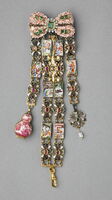
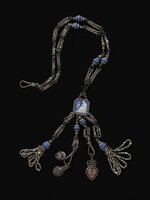
This chatelaine is the reunion of elements from different periods. It is formed of a knot, two bracelets made of enameled gold plates, a pendant in the shape of a dove of the Holy Spirit and a small perfume box from the years 1640-1660, mounted with a large hook, a small hook for attaching the watch and end elements from the 19th century.
-
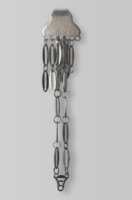
This chatelaine hook was made for the artist's wife, Mary Allen Richardson.
-
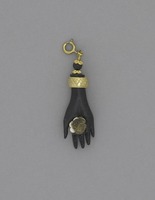
Charm for chatelaine in the form of a small black hand with gold bracelet. The hand holds a small gold flower in its palm. This is most likely a piece of mourning jewelry. The hand is often a mourning symbol in victorian jewelry in memory of husband or sweetheart.
-
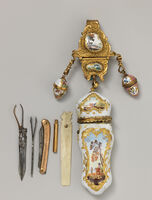
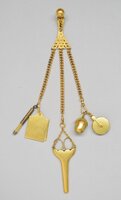
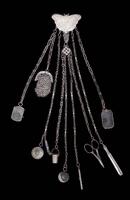
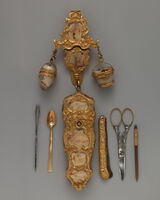
Étuis and châtelaines were sold alongside other luxurious trinkets, known as "toys," through which wealth and taste could be displayed. Some toys were functional, intended to store foodstuffs, cosmetic products, or snuff; others were intended for no purpose other than to delight. Some were made of precious metals, like gold or silver, and were sold at correspondingly high prices; others employed relatively inexpensive materials and were thus available to the expanding middle classes.
-
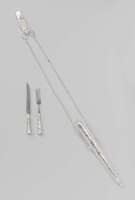
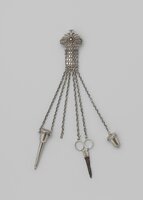
Knife and fork with silver handle. Tube lid, silver, with engraved flower tendrils. Attached to a chatelaine with a chain.
-
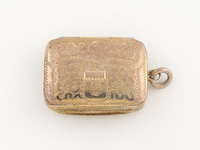
This vinaigrette, a term used for small containers of perfume soaked sponges or smelling salts, features a hook for clasping onto a chatelaine.
-
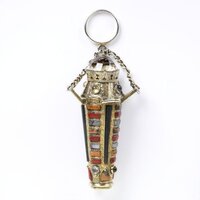
This vinaigrette was made by the Edinburgh jeweller, G&M Crichton who exhibited jewellery at the London Exhibition of 1872.