-
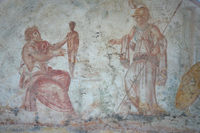 Untitled fresco
 “Roman fresco depicting Prometheus creating man in the presence of Athena, from the arcosolium of a tomb near the Basilica of St. Paul, 3rd century CE. (Museo della Via Ostiense, Rome).”
-
 Prometheus models the first man
 “This fragment of a Roman sarcophagus depicts the Titan, Prometheus, modelling a statue of a nude youth. Minerva touches its head with a butterfly (psyche in Greek, meaning soul), bringing it to life. The action takes place in a natural setting, with a naked river nymph and a clothed tree nymph.”
-
 Untitled relief
 “Relief decorating the seating area entrances of the Roman Amphitheatre of Capua (Italy). It depicts Prometheus having his liver eaten by an eagle. Age of Hadrian (117-138 CE). (Capua Gladiator Museum)”
-
 Avant-testo, 22-6-99, 1999
 A part of the "Avant-testo" series of ballpoint pen calligraphy onto various materials such as canvas, paper, and polyester stretched over a wooden stretcher. Blank did a series of works that were entirely monochromatic done with ballpoint pen onto a surface, usually canvas. The mundane object of a blue ballpoint pen being used to create these large-scale monochromatic works is a maddening thought for the viewer. However, her process only emphasizes the color’s symbolism as a deep and complex infinity.
-
 Untitled gem
 “Gem of glass paste imitating sard, engraved with Herakles with a bow, lion-skin and club; before him sits Prometheus, draped about the legs, with his hands chained above his head.”
-
 Untitled scarab
 “Sard cut scarab engraved with a seated Prometheus making man: he attaches an arm to a skeleton. There is an inscription.”
-
 Untitled (Blue Mirror)
 This work was made to be distributed amongst the viewers. Participants are encouraged to take a sheet off the stack for themselves. Gonzalez-Torres chose the color blue because it is the color that most replicates the feeling of a void or emptiness. Therefore, it is the easiest for viewers to input their own feelings and thoughts into the color. This sheet of paper is supposed to act as a mirror for the people who take it home.
-
 Herakles liberating Prometheus
-
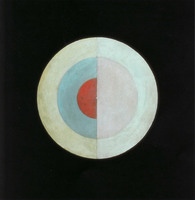 The Swan (No. 16)
-
 Gnathian Bell Krater
 “Black body with tendril of ivy leaves and grape clusters in added white. On the front, a figure of an old man with a swollen belly and an oversize phallus wearing a cloak stands in a rocky landscape. His wrists are bound. Below him to left is a crow. The scene is a parody of Prometheus bound to a rock having his liver eaten by an eagle.”
-
 Laconic Kylix with Prometheus and Atlas
 “On this item we are able to admire one of the first known illustrations of the myth of Atlas, possibly directly inspired by the Theogony of Hesiod. Bearded Atlas bends at the knees under the weight of the heavenly vault dotted with stars that he has to carry, having been condemned by Zeus to keep heaven and earth separated. His punishment is associated with that of another Titan, his brother Prometheus, guilty of having given fire to man, and therefore bound to a pole and subjected to perpetual torture: an eagle pecks at his liver, which then regrows every night, only to be eaten again the following day. The linear plane on which the two Titans are depicted, possibly symbolising the Earth, rests on an imposing Doric column from which two lotus buds branch. The snake on the left may constitute a reference to the subterranean sphere of the underworld.”
-
 Bleu I, II, III
 These three paintings are typically regarded and one triptych. The small and sparing figures, a few red and black dots, are composed so that the depth of the blue is overwhelming. The subject of the paintings are not the small figures, but the deep, almost vibrating, blue.
-
 Blue Monochrome
 Yves Klein worked almost exclusively in the color blue. He created many monochrome paintings in the pigment he created himself, International Klein Blue.
-
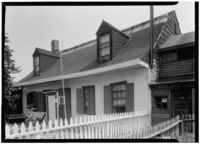 Close Up View from Northwest, Vander Ende-Onderdonk House, 1936
 Black and white photograph depicting front view of the Vander Ende-Onderdonk House (Queens, NY). Visible in the image: the stone house, gambrel roof with two dormer windows, portion of the wood-frame addition, and two wooden fences along division between the stone house and addition. This photograph is part of the 1936 Historic American Building Survey. Digital image available through the Library of Congress.
-
 Femme aux Bras Croisés (Woman with Folded Arms)
 Picasso's famous Blue Period took lace between the years of 1901 and 1904. During this period he painted almost exclusively in shades of blue. Often his subjects are depicted as sullen and depressed, looking away from the viewer.
-
 Spiraea Aruncus
 Anna Atkins is one of the first documented women photographers, and is the first to create a book of photographs. She did not invent the cyanotype process, but is the one credited to its popularity. She used the chemical process to document British algae.
-
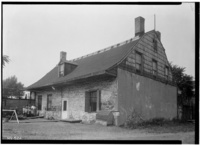 Back View from Southeast, Vander Ende-Onderdonk House, 1936
 Black and white photograph depicting rear (southeast) view of the Vander Ende-Onderdonk House (Queens, NY). Visible in the image: the rear facade and east side of the stone house, rear of gambrel roof with one dormer window, and eight people standing along a fence near the west exterior of the house. This photograph is part of the 1936 Historic American Building Survey. Digital image available through the Library of Congress.
-
 The Great Wave
 The image depicts an enormous wave threatening three boats while Mount Fuji rises in the background. As in many of the prints in the series, it depicts the area around Mount Fuji under particular conditions, and the mountain itself appears in the background.
-
 Blue Nude II
 Matisse worked on a series of three blue female nudes. All three are cutouts of a stark blue in the shape of a seated female.
-
 La Venganza de los Pueblos
 A man with a raised axe and other workers attacking Nazi soldiers. Hitler at lower left with hands on dead babies, followed by Mussolini, burning churches and figures on gallows.
-
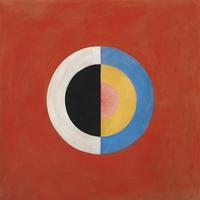 The Swan (No. 17) by Hilma af Klint
-
 Lion next to the prophet Daniel
 A detail from the statue of Daniel, the lion is an allusion to Daniel's victory over the lions. This one is under his right foot.
-
 Whale next to the prophet Jonah
 A detail from the statue of Jonah, the sinuous silhouette of the whale, complete with toothy maw, seems to emerge as if from a Rococo fountain
-
 Por Enseñar a Leer
 A man and woman pointing at a man holding a chair, who is also being threatened by two masked bandits, one of whom holds a gun.
-
 Chiclero
 Chicle gatherer; face surrounded by roots and foliage.
Signed in pencil