-
 Proletarian Hand
 Méndez made most of his prints to call attention to social and political causes. Here he has surrounded a worker's hand with the last names of political martyrs in the United States and Mexico who were honored as heroes in left-wing circles all over the world. At first glance, the hand appears be an X-ray image, but closer examination reveals that the finger bones are hanged prisoners and the wrist bones are portraits of some of the persons named in the background.
-
 El Embajador Lane Wilson "Arregla" el Conflicto
 The American ambassador Lane Wilson playing with toy figures referring to his meddling in the affairs of Mexico, from the portfolio 'Estampas de la Revolución Mexicana' (prints of the Mexican Revolution). The American diplomat Henry Lane Wilson was appointed ambassador to Mexico in 1910. He purportedly assisted in arranging the 1913 murder of Francisco Madero, the revolutionary who succeeded Díaz as president. Wilson is believed to have hatched the plot with Victoriano Huerta, who had a military career in the Díaz government, and then became a supporter of Madero, only to betray him. The toy figurine held by Wilson in this print represents Huerta and refers to unwanted American intervention in Mexican politics. The figures in the right side are Madero and Zapata.
-
 Neptuno
 An early wood engraving by Taller de Grafica Popular founder and mainstay Leopoldo Mendez.
-
 Girl with a Pearl Earring
 the Girl With a Pearl Earring is one of the most well known paintings in the world. The focal point is the woman's pearl earring, but her blue turban gives her an air of royalty.
-
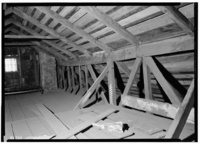 Truss Under Curb of Gambrel Roof, Vander Ende-Onderdonk House, 1936
 Black and white photograph depicting partial interior view of the attic and gambrel roof, at the Vander Ende-Onderdonk House (Queens, NY). Visible in the image: the underside of gambrel roof, support beams, interior wall, window, brick chimney, and wood-plank attic floor. This photograph is part of the 1936 Historic American Building Survey. Digital image available through the Library of Congress.
-
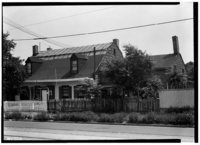 Far View from Northwest, Vander Ende-Onderdonk House, 1936
 Black and white photograph depicting front view, from across the street, of the Vander Ende-Onderdonk House (Queens, NY). Visible in the image: the stone house, gambrel roof with two dormer windows, wood-frame addition (partially obscured by trees), wooden fence along front, and part of Flushing Avenue. This photograph is part of the 1936 Historic American Building Survey. Digital image available through the Library of Congress.
-
[Untitled]
-
 Cornuti (kind of snake)
 Miniature from folio 123r from Der naturen bloeme (KB KA 16) by Jacob van Maerlant
-
 Rhinoceros
 engraving on laid paper
sheet (trimmed within plate mark): 24.1 x 34.5 cm (9 1/2 x 13 9/16 in.)
Bartsch, no. 47
-
 Ocelot: the evolution of taxidermy
 A detail from the Museum für Naturkunde's "Ocelot: the evolution of taxidermy". The focus is on a mounted ocelot from 1818 done by a taxidermist who had never seen a live ocelot and had nothing but the skin and a few sketches of the animal, lacking basic anatomical knowledge.
-
 Joan Mitchell: Portrait of an Abstract Painter
 A powerful and intimate portrait, JOAN MITCHELL: PORTRAIT OF AN ABSTRACT PAINTER captures Mitchell's independent spirit and testifies eloquently to Mitchell's art. Joan Mitchell was born in Chicago in 1926 and died in Paris in 1992. After graduating from the School of the Art Institute of Chicago, Joan settled in New York City in 1950. She was an active participant of New York's dynamic Abstract Expressionist scene and hung out with fellow painters Franz Kline, Willem de Kooning and Philip Guston and, soon, poets Frank O'Hara, James Schuyler and John Ashbery. In the mid-fifties, she moved to Paris, France. There she was part of a circle of friends that included Pierre Matisse, Samuel Beckett and Alberto Giacometti. Mitchell is one of the great abstract painters of the 20th century.
-
 Perna (Oyster)
 Miniature from folio 108v from Der naturen bloeme (KB KA 16) by Jacob van Maerlant
-
 Scrovegni Chapel
 The Scrovegni Chapel is in Padua, Italy. Giotto was both the architect and the painter of this famous chapel. It is well known for its extravagant use of blue, specifically in the ceiling.
-
 How to Draw a Bunny
 Ray Johnson was a mystery wrapped in an enigma who lived his life like a Pop Art performance piece. His final masterpiece may well have been his own death, in January 1995. This enthralling documentary – edited and directed by John Walter, photographed and produced by Andrew Moore – is at once playful and haunting, an in-depth portrait of an iconoclastic artist who was fundamentally unknowable even to his closest friends.
Dubbed “the most famous unknown artist in America” in his time, Johnson is a prime example of the underground, eccentric genius who remains unknown to the public at large, while being legendary among his peers and others “in the know.” Many luminaries of the modern art world counted themselves fans and friends of Johnson, and “How to Draw a Bunny” features priceless interviews with such masters as Roy Lichtenstein, James Rosenquist, Chuck Close and Christo. Some marvel at the elusive complexity of Johnson’s art – a series of increasingly intricate letters to agent Mort Janklow is one example – while others conclude that he was most likely from another planet altogether. But none can separate the man from his work – his whole existence was his art, and his concepts of what an artwork could be were an (uncredited, of course) influence on the acknowledged father of Pop Art, one Andy Warhol. As Warhol Factory denizen Billy Name opines, “Ray wasn’t a person, he was a collage or a sculpture…he was Ray Johnson’s creation.”
In the late ’80s, Johnson fortuitously added video to his palette. Some of that footage is included here, though much of it consists of Johnson going to a cocktail party, putting the guests on, making all of them part of his ongoing biographical “piece.” Johnson always seemed to have a sense of humor about what he was doing, and in the film he never once comes across as pretentious (as so much of the New York scene at the time did).
This enigmatic whimsy extended to Johnson’s death, likely a suicide. His body was found floating under the Sag Harbor bridge, by buoy number 13. It was the 13th of January, and Johnson had stayed the night before in a motel, room number 247 (which adds up to 13). He was 67 at the time of his death (which also adds up to 13). In astounding video footage shot after his death, we see that Johnson had deliberately arranged his entire house to be discovered as his last great artwork, a meticulous warehouse of his ideas, his obsessions.
Then again, maybe “How to Draw a Bunny” itself is really Ray Johnson’s final testament, created with a mischievous wink from beyond the grave. After watching this extraordinary documentary, one has no doubt that such an act is well within Johnson’s creative powers.
-
 Georgia O’Keeffe – A Life In Art
 This short documentary produced for The Georgia O’Keeffe Museum in Sante Fe, New Mexico, introduces museum visitors to the artist. The film uses O’Keeffe’s letters, Alfred Stieglitz’s famous O’Keeffe photographs, archival footage and contemporary location film of New Mexico to evoke her life and work. On-camera, O’Keeffe tells much of the story in her own words. Georgia O’Keeffe: A Life in Art captures the artist in the magnificent New Mexican landscape that inspired much of her work, making effective use of many of the paintings in the museum’s remarkable collection to tell of Georgia O’Keeffe’s life in art.
-
 Cult Image of the God Ptah
 This statuette depicts Ptah, the chief god of Egypt's capital city Memphis, who is easy to identify by his tight-fitting cap and enveloping shroud. Other iconographic details, such as the royal beard, the large and detailed broad collar, the scepter of merged "was" and "djed" signs, and a platform representing the hieroglyph for universal order, as well as the brilliant blue stone, communicate four important epithets: Lord of Lower Egypt, Master Craftsman, Lord of Truth, and Lord of the Sky.
-
 Leo the Lion
-
 Painter's Painting
 Documentary exploring the gravitational shift of art influence from Europe to America, beginning with Abstract Expressionism, moving on to Pop Art and later, Minimalism.
With Willem de Kooning, Jasper Johns, Andy Warhol, Jackson Pollock, Robert Rauschenberg and others.
-
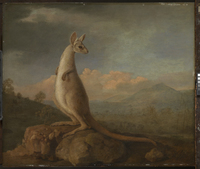 The Kongouro from New Holland
 A small kangaroo perched on a rock in left profile but looking back over its left shoulder, with a valley of light scrub behind backed by mountains and a cloudy sky.
-
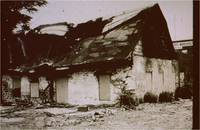 East Exterior and Rear Facade After Fire, Vander Ende-Onderdonk House, 1975
 Black and white photograph depicting rear (southeast) view of the Vander Ende-Onderdonk House (Queens, NY), with visible damage from 1975 fire. Visible in the image: the rear facade and east side exterior of the stone house, gambrel roof, portion of brick addition on front of house, and top of warehouse across Flushing Avenue. Digital image from the Greater Ridgewood Historical Society, collection undetermined.
-
 Deportation to Death (Death Train)
 With more than two dozen illustrations by 11 artists of the Taller de Gráfica Popular, The Black Book of Nazi Terror in Europe (1943) was the group’s most important antifascist collaboration with the European exile community in Mexico. Supported by the government of Manuel Ávila Camacho, this groundbreaking book extensively documented Nazi atrocities through testimonies, statistics, photographs, and illustrations, with contributions by well-known European, American, and Latin American writers and artists. Many of the Taller’s illustrations were also produced as individual prints, including the three displayed here. Méndez’s Deportation to Death is perhaps the earliest print related to the Holocaust and the death camps. Méndez’s print focuses on the deportation of Jews from Europe’s ghettos, their humble clothing and pained countenances revealed in expressionistic fashion by the Nazi soldier’s lamp.
-
 The Symphonic Concert of Skeletons, 1943
 In 1942 the Taller de Gráfica Popular published a portfolio of Méndez’s prints, including some of his most famous caricatures from the early 1930s. Méndez often engaged in pointed satire in these works, which were representative of the era’s divisive politics. Calaveras of the National Mausoleum, perhaps the first use of the calavera in post revolutionary prints, portrays the elite inauguration of the Palacio de Bellas Artes. It brands the skeletons of Rivera and Carlos Riva Palacio, head of the Partido Nacional Revolucionario, as reactionary capitalists, and in Rivera’s case, ironically as a sympathizer of the Fourth International, led by the Soviet dissident Leon Trotsky.
-
 Meet the Artist: Grace Hartigan
 Grace Hartigan grew up in New Jersey, where she married the boy next door after graduating from high school. They ended up penniless in Los Angeles, however, and Hartigan returned to the East Coast pregnant and alone. In 1948 she was mesmerized and fascinated by a Jackson Pollock exhibition and lived briefly on Long Island with the artist and his wife. She worked odd jobs in New York through the 1950s to pay for paint. In 1959, Hartigan married Dr. Winston Price and moved with him to Baltimore, where she worked in a large studio in Fells Point for decades. (Mattison, Grace Hartigan: A Painters World, 1990)
-
 Inside New York's Art World: Lee Krasner
 Barbaralee Diamonstein-Spielvogel interviews Lee Krasner concerning her works, career, and the artists she knows, as hosted by the Duke University Libraries.
-
 Why I Never Became a Dancer
 Emin uses her emotional life as the source and subject matter of her art. This takes the form of narrative or documentation of traumatic events such as the death of a family member or close friend, her rape and her abortions, coupled with the direct expression of such feelings as love, hate, anger, fear and desire. Autobiographical and diaristic texts appear on her monoprints, her quilt-like wall hangings and in small publications such as Explorations of the Soul 1994 (an edition of 200); or they are narrated aloud, as in this video. Her artistic production could be seen as an attempt to find a therapeutic resolution to her damaged past and the continuing difficulties and frustrations of the present. This creative attitude is encapsulated in words appliquéed on a chair she inherited from her grandmother: 'It's not what you inherit. It's what you do with your inheritance.' By sharing thoughts and feelings of the type for which people are generally made to feel ashamed, Emin taps into collective experience in an affirmative way.
Why I Never Became a Dancer was made in an edition of ten. It invokes the artist's early teenage years spent kicking against the boredom of the seaside town, Margate, where she grew up, and experimenting with sex from an early age until she became disillusioned with men and turned instead to dancing. Beginning with the title words written large on a wall, the camera pans around views of Margate significant to Emin's past, including the school she attended, the sea front, shopping arcades and a dramatic clock tower. This sequence is overlaid with the voice of the artist narrating her story. The video climaxes with her attempt to win the finals of the local disco-dancing competition and escape to London to compete for the British Disco Dance Championship 1978.
And as I started to dance
people started to clap
I was going to win
and then I was out of here
Nothing could stop me
And then they started
SLAG SLAG SLAG
(Words from the video narrated by the artist, quoted in Brown, p.29.)