-
 Woman at a Counter Smoking, N.Y.C., 1962
-
 Girl in a coat lying on her bed, N.Y.C.
-
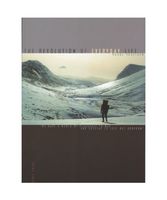 The Revolution of Everyday Life
-
 Wax Museum Strangler, Coney Island, NY, 1972
-
 Woman on the Street with Her Eyes Closed
 Unmarked recto; stamped verso, upper left, in black ink: "Not to be reproduced in any way without written permission from Doon Arbus."; stamped and inscribed verso, upper center, in black ink: "Copyright © 19 [stamped] 86 [inscribed] / The Estate of Diane Arbus [stamped]"; stamped and inscribed verso, upper right, in black ink: "a diane arbus print [stamped] # 5B-6A-1U-1114 [inscribed] / doon arbus administrator [stamped] doon arbus [inscribed]"
-
 A Family On Their Lawn One Sunday in Westchester, New York
 Throughout her career, photographer Diane Arbus demonstrated a gift for capturing the unusual and
eccentric in a compelling, thoughtful manner. This now-iconic photograph was originally included in a photo–essay, “Two American Families,” published in the London Sunday Times Magazine. In a letter to her editor, Arbus described encountering the woman pictured here in a bookstore: “I said I wanted to photograph her with husband and children so she suggested I wait till warm weather so I can do it around the pool! … They are a fascinating family. I think all families are creepy in a way.” Part of the caption for the image, based on Arbus’s correspondence, reads, “The parents seem to be dreaming the child and the child seems to be inventing them.
-
 Two Ladies at the Automat (New York City)
 Just two years before she received her first camera, Diane Arbus wrote: “There are and have been and will be an infinite number of things on Earth. Individuals all different, all wanting different things, all knowing different things, all loving different things, all looking different… . That is what I love: the differentness.” Arbus’s appreciation for the unusual, eccentric, and extraordinary led her to photograph a range of subjects over the thirty years of her career—transvestites, giants, art philanthropists, nudists, and, as here, similarly dressed and made-up women. These ladies, with their cigarettes poised in one hand and lighters clutched in the other, occupy a booth in a New York City automat. (Now nearly obsolete and a nostalgic choice even in the 1960s, automats offered simple fare, sold from coin-operated vending machines, that was eaten at surrounding booths and counters.) Like many of Arbus’s subjects, these women were photographed in a straightforward manner. The eerily matched ladies face the camera head-on, posed in front of an unadorned marble wall and staring directly at the viewer. The candor with which Arbus presented these women is typical of the pioneering, powerful first-person directness that exists throughout her photography.
-
[Untitled]
-
 Untitled, from the Metamorphosis series
-
 Targets
-
 The Mapping Journey Project
-
 Map
Map
-
 Selected Scriptures, Page 2001, The New World No. 1
-
 Hot Spot
-
 Map of America
-
 Map Projections: The Doughnut
-
 Reconstructing an Exodus History: Boat Trajectories in Asia
-
 Map of the World
-
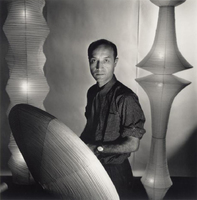 Noguchi, Isamu, 1904-1988
-
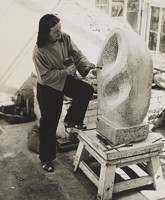 Hepworth, Barbara, 1903-1975
-
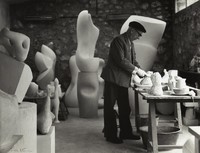 Arp, Jean, 1887-1966
-
 Gustav Klimt Photograph
-
 Brancusi, Constantin, 1876-1957
-
 The Miracle (Seal [I])
 Constantin Brancusi revisited subjects and forms frequently throughout his career, executing variations of earlier sculptures with subtly reimagined contours and in new mediums and scales. Both The Miracle (Seal [I]) (Le miracle, ca. 1930–32) and Flying Turtle (Tortue volante, 1940–45) were the first of their kind and relatively late additions to the artist’s repertoire of motifs; in fact, Flying Turtle was the last sculpture Brancusi executed that did not have a direct formal precedent. The two works do, however, show a continuity with many of the sculptor’s overarching concerns.
Animals were a common subject for Brancusi, though excepting humans, he focused exclusively on those that fly or swim. The shapes of such animals were suited to the compact volumes that the sculptor favored, as well as his desire to depict speed and movement. In The Miracle (Seal [I]) and Flying Turtle, the simplified forms suggest not only the creatures’ namesakes but also their fluid means of locomotion. By balancing both sculptures delicately on their respective limestone bases and giving each a pronounced upward thrust, Brancusi captured the seeming weightlessness of bodies suspended in water or air. The effect is striking given the significant mass of these two marble works.
For Brancusi, animals also held symbolic weight and transcendent possibilities. In the case of The Miracle (Seal [I]), the breaching form may allude to emotional regeneration, as inspired by the sight of an acquaintance of the artist experiencing catharsis while swimming. Such transformational potential is taken a step further in Flying Turtle. By imaginatively endowing the subject with flight, Brancusi created an emblem of the lowliest creature’s ability to transcend its station.
-
 Brilliance