-
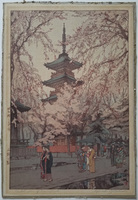 "A Glimpse of Ueno Park"_Yoshida Hiroshi
 Following the Great Kanto Earthquake of 1923, Hiroshi Yoshida embarked on a tour of the United States and Europe, painting and selling his work. When he returned to Japan in 1925, he started his own workshop, specializing in landscapes inspired both by his native country and his travels abroad. Yoshida often worked through the entire process himself: designing the print, carving his own blocks, and printing his work. His career was temporarily interrupted by his sojourn as a war correspondent in Manchuria during the Pacific War. Although he designed his last print in 1946, Yoshida continued to paint with oils and watercolors up until his death in 1950. Hiroshi Yoshida was widely traveled and knowledgeable of Western aesthetics, yet maintained an allegiance to traditional Japanese techniques and traditions. Attracted by the calmer moments of nature, his woodblock prints breathe coolness, invite meditation, and set a soft, peaceful mood. All of his lifetime prints are signed “Hiroshi Yoshida” in pencil and marked with a jizuri (self-printed) seal outside of the margin. Within the image, most prints are signed “Yoshida” with brush and ink beside a red “Hiroshi” seal.
-
 African Cheetah
 Image of stuffed cheetah from Akeley Hall of African Mammals, 3rd floor.
-
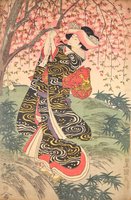 "Springtime"_Toyokuni ga
 Ukiyo-e artist Utagawa Toyokuni catapulted the eponymous Utagawa School to fame with his prints of elegant courtesans and actors, book illustrations, and paintings. He had a strong reputation during his lifetime and taught a host of talented students who carried on the traditions of the Utagawa School, including Utagawa Kunisada and Kuniyoshi. Toyokuni drew inspiration from the famous contemporary artists around him, particularly from Kitagawa Utamaro. During the early 1790s, his output mainly consisted of portraits of courtesans, who bear an elegance and idealism indicative of the period. These works set a standard for bijin-ga (pictures of beautiful women) for Ukiyo-e artists for generations to come. Through the 1790s and 1800s, Toyokuni not only captured actors’ stage roles, but also their private lives and individual personalities in his yakusha-e (actor prints).
-
 Hudson River Waterfront, New York City
 New York City waterfront with steamboats on the Hudson River in the foreground
-
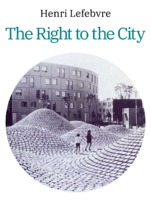 The Right to the City
-
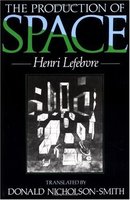 The Production of Space
-
 Charles Edward Johnson, Palisades Park, N.J., October 22, 1916
 Charles Edward Johnson sits cliff-side overlooking the Hudson River at Palisades Park
-
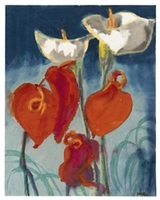 "Callas und Anthurien"_Emil Nolde
 A wood carver and draftsman, Emil Nolde studied arts and crafts early on and eventually took up painting and printmaking as a full time profession at the age of 31. His intensely colored, gestural oil paintings of urban nightlife, biblical scenes, flower motifs, and landscapes are considered among the best examples of German Expressionism and admired for their intense psychological power. Traces of Primitivism are evident in his incorporation of exotic figures and masks, especially in his later watercolors inspired by a journey to the South Pacific. Likewise, among Die Brücke, a group of German Expressionists with whom he was associated, Nolde was considered the preeminent intaglio printmaker. He achieved rich tonal effects and textural results with a unique treatment of the copper plate.
-
 Boy Jumping into Hudson River, NYC
 Boy jumping off industrial building into the Hudson River while onlookers watch
-
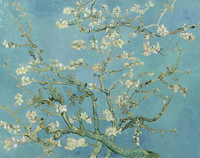 "Almond Blossom"_Vincent Van Gogh
 Large blossom branches like this against a blue sky were one of Van Gogh’s favourite subjects. Almond trees flower early in the spring making them a symbol of new life. Van Gogh borrowed the subject, the bold outlines and the positioning of the tree in the picture plane from Japanese printmaking. The painting was a gift for his brother Theo and sister-in-law Jo, who had just had a baby son, Vincent Willem. In the letter announcing the new arrival, Theo wrote: ‘As we told you, we’ll name him after you, and I’m making the wish that he may be as determined and as courageous as you.’ Unsurprisingly, it was this work that remained closest to the hearts of the Van Gogh family. Vincent Willem went on to found the Van Gogh Museum.
-
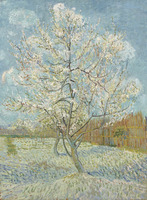 "The Pink Peach Tree"_Vincent Van Gogh
 Van Gogh painted many fruit orchards during his first weeks in Arles (FR). There is an earlier, nearly identical version of this painting, which Van Gogh had completed in one sitting. ‘I’d worked on a no. 20 canvas in the open air in an orchard — ploughed lilac field, a reed fence — two pink peach trees against a glorious blue and white sky. Probably the best landscape I’ve done’, he wrote. When he returned home, he saw the death notice of Anton Mauve (1838-1888), his uncle by marriage. Mauve was a well-known painter from whom Van Gogh had once taken lessons. He dedicated that first work to Mauve and made this new version later to send to Theo.
-
 View of Midtown, Looking Toward the Hudson River
 View of Midtown, Manhattan with the Hudson River in the middle ground
-
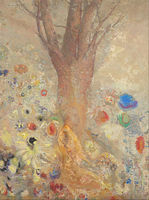 "The Buddha"_Odilon Redon
 The Buddha figure sits in the lotus position under a tree and almost seems part of it. Redon has achieved this effect by using little more than a few outlines to depict it. The artist was deeply interested in eastern spirituality. To give the picture a fresco-like appearance, Redon has chosen a particularly matt sort of paint. He intended the painting to be countersunk into a wall, making it an integral decorative feature of an interior.
-
 Charles Dickens' Letter Opener
 Ivory letter opener with handle made from a cat's paw. Inscription at at the top of the blade near hilt reads: "C.D. in memory of Bob 1882".
-
 Baptising Scene, Near the White Fort, Hudson River, New York
 Baptism scene near the White Fort on the Hudson River
-
 Hudson River
 The Hudson River with industrial buildings on the waterfront
-
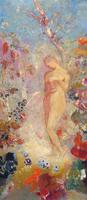 "Pandora"_Odilon Redon
 symbolism (artistic concept)
-
 The Palisades
 View of the Hudson River and the Palisades from the former estate of Christian H. Lilienthal of Yonkers, the house and property of William S. Cochran at right.
-
 Shad Fishermen on the Shore of the Hudson River
 Shad fishermen fishing and smoking on the shore of the Hudson River
-
 Hudson River Scene
 View of Hudson River from West Point, New York
-
 Hudson River Valley from Fort Putnam, West Point
 View of Hudson River Valley from Fort Putnam, West Point
-
 Preparatory Study for Plate 19 of “The Hudson River Portfolio”: View of the Palisades, New Jersey
 View of the Hudson River and the Palisades, New Jersey
-
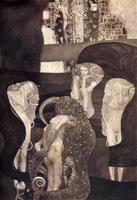 Jurisprudence
 An allegorical painting.
-
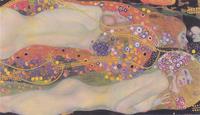 Water Snakes II
 Two or three women swiming.
-
 Standing Nude
 Sketch of a standing woman.