-
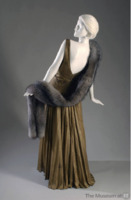 30's evening dress
 This gold lamé evening dress from the 1930s reflects the glamour and elegance associated with Hollywood “silver screen” fashion during the interwar period. Designed by New York dressmakers Jessie Farquharson and Margaret Wheelock, the gown features a floor-length flowing silhouette, a low neckline, draped detailing, and a softly gathered skirt that emphasizes movement and fluidity. The metallic fabric creates a shimmering effect characteristic of 1930s eveningwear, offering a luxurious contrast to the more restrained and tailored styles worn during the day. Paired with a dramatic fur stole, the ensemble embodies the sophisticated femininity and cinematic influence that shaped high fashion during the decade.
-
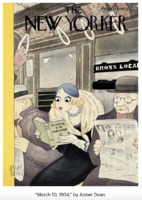 March 10, 1934
 This New Yorker cover from March 10, 1934, illustrated by Abner Dean, depicts fashionable passengers inside a New York subway car during the early 1930s. The central female figure wears a dark, form-fitting dress accessorized with a luxurious fur collar, white gloves, a blue cloche-style hat, and a matching beaded necklace. Her appearance reflects the transition from the loose flapper silhouettes of the 1920s to the more elegant and elongated styles of the 1930s. The emphasis on fur, refined accessories, and streamlined tailoring conveys the sophistication associated with urban fashion during the interwar period, while the subway setting situates high fashion within everyday metropolitan life.
-
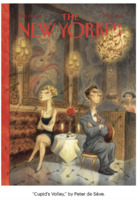 February 19, 1996
 This New Yorker cover from February 19, 1996, illustrated by Peter de Sève, reflects the sleek and sophisticated fashion associated with 1990s supermodel culture. The female figure wears a minimalist black slip-style dress with thin straps and a fitted silhouette, embodying the decade’s preference for understated elegance and body-conscious tailoring. Paired with pointed heels, short styled hair, and minimal accessories, the look reflects the influence of 1990s luxury minimalism popularized by supermodels and designers such as Calvin Klein. The male figure’s oversized suit further reflects contemporary 1990s tailoring trends, emphasizing clean lines and refined simplicity.
-
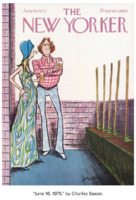 June 16, 1975
 This New Yorker cover from June 16, 1975, illustrated by Charles D. Saxon, reflects the relaxed and expressive fashion of the 1970s. The female figure wears a long flowing maxi dress with bold swirling psychedelic patterns and a wide-brimmed blue hat, embodying the bohemian influences that continued from late 1960s hippie style. The male figure wears flared jeans and a patterned button-down shirt, characteristic of the casual and body-conscious silhouettes popular during the decade. The cover highlights the era’s preference for bright prints, relaxed forms, and individuality in everyday fashion.
-
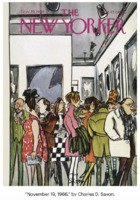 November 19, 1966
 This New Yorker cover from November 19, 1966, illustrated by Charles D. Saxon, depicts a fashionable crowd gathered in an art gallery, reflecting the bold and experimental styles of the 1960s. The figures wear brightly colored mini dresses, patterned tights, oversized coats, and graphic prints, emphasizing the decade’s shift toward youthful, playful, and modern fashion. Short hemlines, geometric patterns, and vibrant colors reflect the influence of the Mod style popularized during the period. The cover captures the connection between fashion, contemporary art, and urban social culture in mid-1960s New York.
-
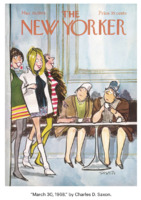 March 30, 1968
 This New Yorker cover from March 30, 1968, illustrated by Charles D. Saxon, contrasts the youthful fashions of the late 1960s with the more conservative styles of an older generation. The younger figures wear brightly colored mini dresses, patterned tights, knee-high boots, and bold striped fabrics, reflecting the influence of Mod fashion and the youth culture movement of the decade. Their short hemlines, geometric silhouettes, and vibrant colors emphasize the shift toward playful, experimental, and youth-oriented fashion in the 1960s. In contrast, the seated older women wear muted, traditional clothing and hats, highlighting changing social attitudes and generational differences expressed through dress.
-
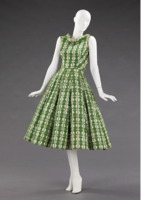 "The Rice Bowl Dress"
 This dress by Carolyn Schnurer reflects the development of American sportswear during the 1950s, combining practicality with refined femininity. Designed for active modern women, the dress features a fitted bodice, a structured A-line skirt, and a geometric green-and-white textile inspired by Japanese decorative arts. Part of Schnurer’s “Flight to Japan” collection, the design incorporates subtle references to Japanese fashion and craft traditions, particularly through the kimono-inspired neckline and parasol-influenced skirt structure. While maintaining the clean silhouette characteristic of 1950s American fashion, the dress demonstrates the growing influence of international cultural inspiration in postwar design.
-
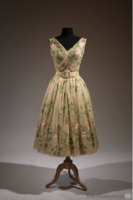 50's Dior dress
 This 1950s evening dress reflects the feminine elegance and structured silhouettes characteristic of postwar fashion. The ensemble features a fitted bodice with a deep V-neckline and a full, voluminous skirt cinched at the waist with a matching belt, embodying the influence of Christian Dior’s “New Look.” The floral embroidered fabric adds softness and romanticism, while the wide skirt emphasizes the hourglass silhouette that defined women’s fashion during the decade. The design illustrates the 1950s focus on refinement, luxury, and idealized femininity in formal eveningwear.
-
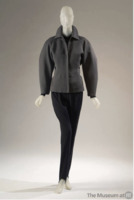 80's set
 This minimalist ensemble reflects the streamlined and architectural approach to fashion associated with late 1980s and early 1990s design. The set consists of a structured gray jacket with exaggerated rounded sleeves paired with a fitted black wool knit jumpsuit and stirrup pants. The simplified color palette and sculptural silhouette emphasize clean lines and modern tailoring rather than decorative excess. The contrast between the oversized jacket and narrow lower silhouette reflects the evolving shift in fashion toward minimalism, functionality, and refined contemporary forms at the end of the 1980s.
-
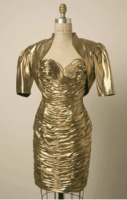 80's dress
 This metallic evening dress reflects the glamorous and body-conscious aesthetic of late 1980s fashion. The short fitted silhouette, sweetheart neckline, and dramatic ruched fabric emphasize the sculpted, exaggerated forms popular during the decade. Made from shimmering gold metallic material and paired with a cropped bolero-style jacket featuring structured puffed sleeves, the ensemble embodies the era’s fascination with luxury, excess, and theatricality. The bold use of shine, texture, and strong shoulder construction reflects the influence of power dressing and high-fashion evening wear in the 1980s.
-
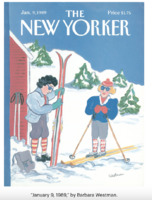 January 9, 1989
 This New Yorker cover from January 9, 1989, illustrated by Barbara Westman, depicts winter sportswear typical of late 1980s fashion. The figures wear brightly colored ski clothing, oversized jackets, patterned leggings, gloves, and round sunglasses, reflecting the decade’s emphasis on bold color combinations and sporty casualwear. The fitted ski pants and layered winter accessories illustrate the growing influence of athletic and leisure fashion in everyday style during the 1980s. The cover captures the playful, practical, and highly stylized aesthetic associated with winter resort culture at the end of the decade.
-
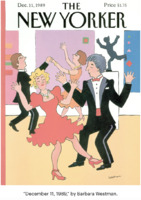 December 11, 1989
 This New Yorker cover from December 11, 1989, illustrated by Barbara Westman, reflects the glamorous and expressive fashion of the late 1980s. The figures wear formal evening attire characterized by bold silhouettes, bright colors, and exaggerated shapes typical of the decade. The female figure’s dress features puffed sleeves, a fitted waist, and a short flared skirt, embodying the dramatic and playful aesthetic associated with 1980s fashion. Accessories such as statement jewelry and high heels reinforce the era’s emphasis on excess, confidence, and theatricality, while the tuxedos and elegant party setting reflect the decade’s culture of luxury and social display.
-
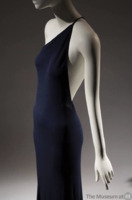 Calvin Klein dress
 This evening dress by Calvin Klein reflects the minimalist and body-conscious aesthetic of 1990s fashion. Made from navy blue rayon jersey, the dress features a sleek column silhouette, a single spaghetti strap, and a dramatic open back that exposes much of the wearer’s body. The smooth fabric closely follows the figure, emphasizing simplicity, sensuality, and understated luxury characteristic of 1990s supermodel-era style. Inspired by the bias-cut glamour of 1930s evening wear, the design combines minimal construction with elegant sensuality, reflecting the decade’s preference for refined and effortless sophistication.
-
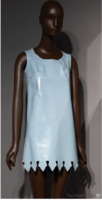 60's vinyl mini dress
 This 1960s mini dress reflects the youthful and experimental spirit of boutique fashion during the decade. Made of turquoise blue vinyl, the sleeveless A-line dress features a short hemline, scoop neckline, and pointed scalloped hem, emphasizing the playful and futuristic aesthetic associated with Mod fashion. The use of synthetic material and bold color illustrates the growing popularity of innovative textiles and mass-produced fashion aimed at young consumers. Associated with the boutique culture of designers such as Mary Quant and Betsey Johnson, the dress reflects the shift toward youth-driven style, individuality, and accessible ready-to-wear fashion in the 1960s.
-
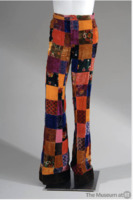 70's men trousers
 These men’s patchwork bell-bottom trousers reflect the transition from Mod fashion to hippie style in the late 1960s and early 1970s. Constructed from brightly colored velvet panels with mixed prints and textures, the pants emphasize individuality, experimentation, and handcrafted aesthetics associated with countercultural fashion. The high waist and dramatic flared silhouette are characteristic of the era’s bell-bottom style, while the use of plush fabrics and vibrant patchwork challenged traditional ideas of masculine dress. The design reflects the increasingly gender-fluid and expressive approach to fashion that emerged during the hippie movement.
-
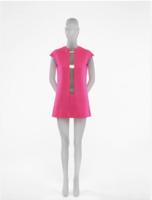 60's mini dress
 This mini dress by Rudi Gernreich reflects the experimental and futuristic direction of late 1960s fashion. The bright pink dress features a short A-line silhouette with a dramatic vertical cutout across the torso, emphasizing the decade’s challenge to traditional ideas of modesty and femininity. Inspired by modern art and geometric abstraction, the design uses bold color, simplified form, and exposed skin to create a striking visual effect. Gernreich’s work embodied the era’s interest in liberation, innovation, and the merging of fashion with contemporary art and popular culture.
-
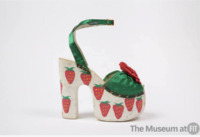 Strawberry high heel platform
 These platform sandals reflect the playful and exaggerated aesthetics of 1970s fashion. Featuring a dramatic high platform heel, ankle strap, and open toe design, the shoes combine bright green satin with hand-painted strawberry motifs and a large decorative fabric rose. The bold colors, oversized proportions, and whimsical decoration embody the decade’s embrace of eclecticism, theatricality, and self-expression. Platform shoes became a defining element of 1970s style, associated with disco culture, glam fashion, and the era’s experimentation with bold forms and decorative excess.
-
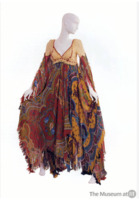 "Cinderella" dress
 This "Cinderella" dress by Giorgio di Sant'Angelo reflects the bohemian and eclectic aesthetics of early 1970s fashion. The dress features a soft chamois empire bodice paired with a flowing skirt made from layered floral-print chiffon panels, creating a dramatic handkerchief hem and loose, romantic silhouette. Inspired by the relaxed and mix-and-match style of contemporary street fashion, the design combines vibrant colors, patchwork-like patterns, and lightweight fabrics associated with hippie and bohemian influences. Despite its informal appearance, the dress was intended for luxury fashion consumers, illustrating how countercultural styles were adapted into high fashion during the 1970s.
-
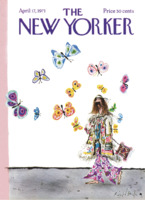 April 17, 1971
 This New Yorker cover from April 17, 1971 reflects the influence of hippie and bohemian fashion in the early 1970s. The central figure wears flowing patterned garments, layered textiles, embroidered details, and fur trim, embodying the era’s preference for eclectic, handmade, and globally inspired styles. Long hair, loose silhouettes, and vibrant psychedelic prints reflect the countercultural aesthetics associated with the hippie movement, which rejected the structured and polished fashions of earlier decades. The colorful butterflies and decorative motifs reinforce themes of freedom, individuality, and connection to nature that shaped youth culture and fashion during the period.
-
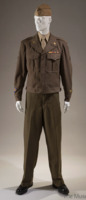 Man's US Army Air Forces uniform
 This U.S. Army Air Forces uniform from World War II features the “Ike” jacket (M-1944), a short, waist-length design associated with General Dwight D. Eisenhower. Made in olive drab wool, the uniform includes a structured jacket with flap pockets and matching trousers, paired with a cotton webbing belt. The design reflects the functional and streamlined aesthetic of 1940s military dress, prioritizing mobility, practicality, and uniformity. The adoption of the Ike jacket marks a shift toward more efficient, modernized uniforms, aligning with the demands of wartime service and influencing postwar menswear silhouettes.
-
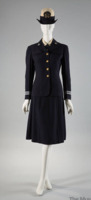 Navy Women's Uniform
 This U.S. Navy W.A.V.E.S. uniform, designed in 1942 by American couturier Mainbocher, reflects the intersection of high fashion and military functionality during World War II. Made from the same navy blue wool as male officers uniforms, the ensemble includes a tailored jacket with structured shoulders, a fitted waist, and gold buttons, paired with a knee-length skirt and a matching brimmed hat. The design embodies the 1940s emphasis on clean lines, discipline, and practicality, while maintaining a polished and feminine silhouette. As noted by commanding officer Mildred H. McAfee, the uniform was intended to be both "becoming and functional", highlighting how women’s wartime roles were expressed through clothing that balanced authority, utility, and style.
-
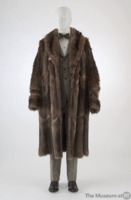 Man's fur coat
 This men’s raccoon coat, dating from the 1920s, reflects a distinctive fashion trend associated with American college culture during the decade. Oversized and voluminous in form, the coat is made from raccoon fur and features a large shawl collar, deep cuffs, and a double-breasted front with prominent horn buttons and braid loop closures. The exaggerated proportions and heavy fur construction created a dramatic silhouette, often worn over tailored suits.
Raccoon coats became especially popular on college campuses in the early 1920s, where they symbolized youthful affluence, leisure, and participation in the vibrant social life of the Jazz Age. Often associated with football games and campus events, these coats quickly became an iconic element of fashionable men’s outerwear during the period.
-
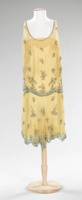 Evening Flapper dress
 This evening dress by Peggy Hoyt reflects the elegant and modern style of women’s fashion in the 1920s. The loose, straight silhouette and dropped waist are characteristic of the flapper era, emphasizing comfort and movement. Made of lightweight yellow fabric, the dress is decorated with intricate beaded patterns that add shimmer and refinement. Hoyt was known for her creative designs and use of rhinestone ornamentation, and this piece exemplifies the decorative elegance that appealed to her exclusive clientele.
-
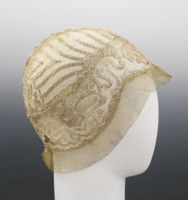 Evening cloche hat
 This evening cloche hat by Jeanne Lanvin reflects the influence of East Asian decorative arts that appeared in her designs during the 1920s. The delicate cap is made of sheer net and embellished with intricate gold embroidery arranged in concentric bands and wave-like motifs, recalling patterns found in Chinese Qing dynasty imperial textiles. Lightweight and luminous, the hat exemplifies the refined elegance of 1920s evening fashion. Such transparent headpieces, adorned with shimmering decorative elements, were designed to frame the face and often functioned as an alternative to traditional jewelry worn at the neck or ears.
-
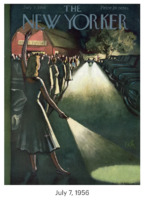 July 7, 1956
 This New Yorker cover from July 7, 1956 depicts a nighttime scene outside a drive-in theater, reflecting postwar American leisure culture of the 1950s. The central female figure wears a fitted, knee-length dress with a softly flared skirt, characteristic of the feminine silhouettes popular during the decade. The dress emphasizes the cinched waist and elegant tailoring associated with 1950s fashion, influenced by Christian Dior’s “New Look.” Paired with heels and styled hair, the figure embodies the polished and idealized femininity promoted in postwar American culture, where fashion emphasized refinement, domestic prosperity, and glamour in everyday social settings.