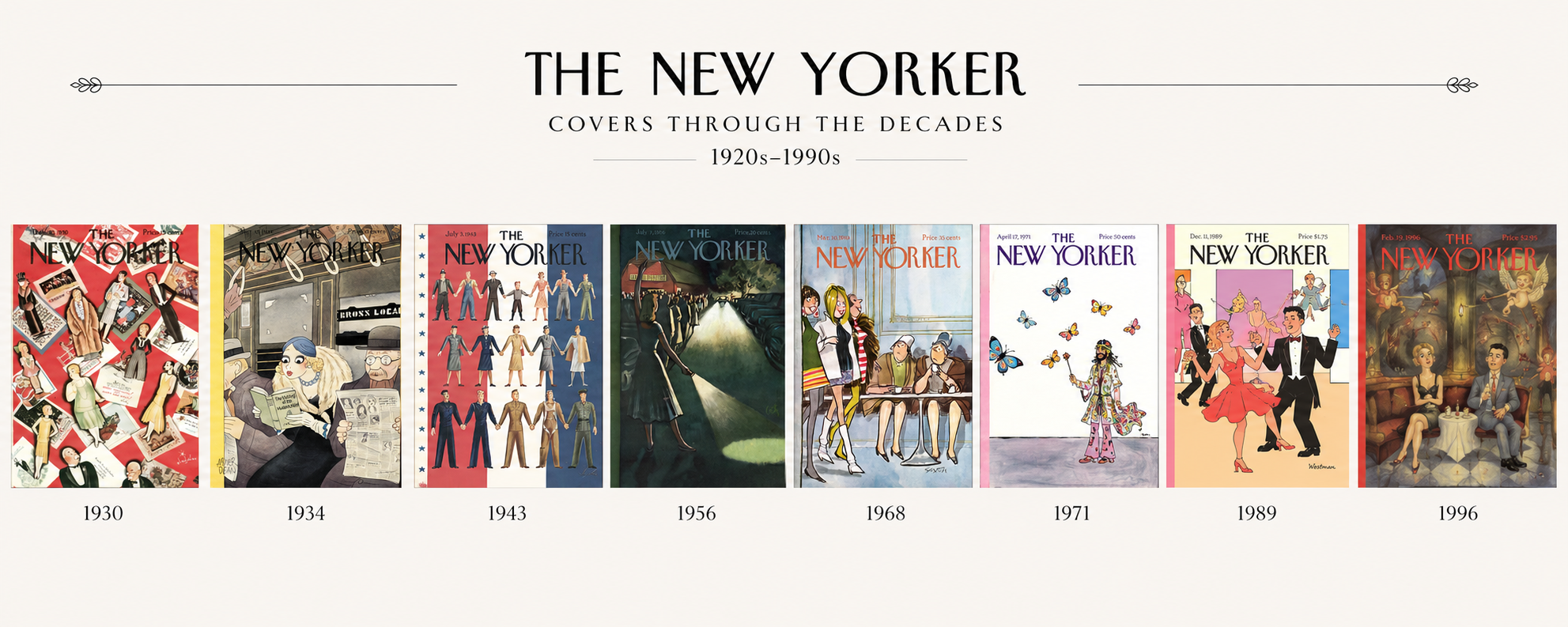
Fashion Through the Decades: 1920s–1990s
A digital collection exploring the evolution of twentieth-century fashion through the New Yorker magazine covers.
I chose the subject Fashion through The New Yorker because it allowed me to connect fashion history with digital cultural heritage through both media and material culture. Rather than focusing only on the already digitized covers of The New Yorker, I wanted to create a dialogue between these illustrations and actual fashion objects from the same historical periods. By pairing selected covers from each decade with garments, accessories, and museum pieces, the collection demonstrates how magazine imagery reflected broader social and cultural transformations taking place in society.
This digital collection explores the transformation of fashion between the 1920s and the 1990s through garments, accessories, and museum objects from institutional collections. Fashion reflects social change, gender roles, technological innovation, and cultural identity. By digitizing and cataloging these objects, museums make fashion history more accessible to wider audiences while preserving important material culture online.
I think this subject is particularly important in the context of digital cultural heritage because it shows how digital collections can connect different types of cultural materials across institutions and time periods to create new narratives. The covers of The New Yorker function not only as illustrations, but also as visual records of changing lifestyles, aesthetics, and social values. When placed alongside historical fashion objects, they reveal how fashion can tell a broader story about the passing of time: from the economic and cultural optimism following the First World War, to the transformations brought by the Second World War, the emergence of youth culture and consumerism in the postwar decades, and finally the minimalist aesthetics of the 1990s.
Through digitization, these objects and images become more accessible to audiences who may never encounter them physically in museums or archives. At the same time, the project demonstrates how digital curation can create interpretive connections between media, fashion, and history, allowing viewers to understand fashion not simply as clothing, but as an important reflection of cultural memory and societal change.