-
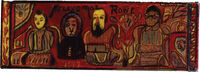 Untitled (Row of Figures)
-
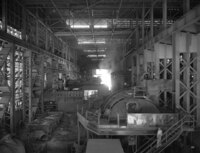 Interior of Kaiser Steel Mill in Fontana, California
 Interior view of Keiser Still Mill in California
-
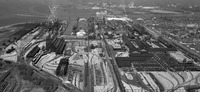 Bethlehem Steel Corporation. Lackawanna, NY
 Aerial view of the Bethlehem Steel Corporation, Lackawanna Plant (HAER)
-
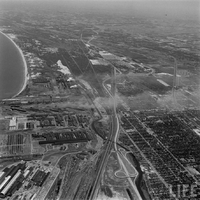 Aerial view of Gary Works Steel Mill
 This aerial photograph of the U.S. Steel Gary Works and the surrounding highway infrastructure in Gary, Indiana, was captured for LIFE Magazine,
-
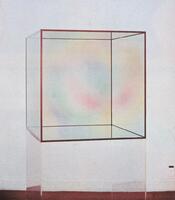 Memories of Mike
-
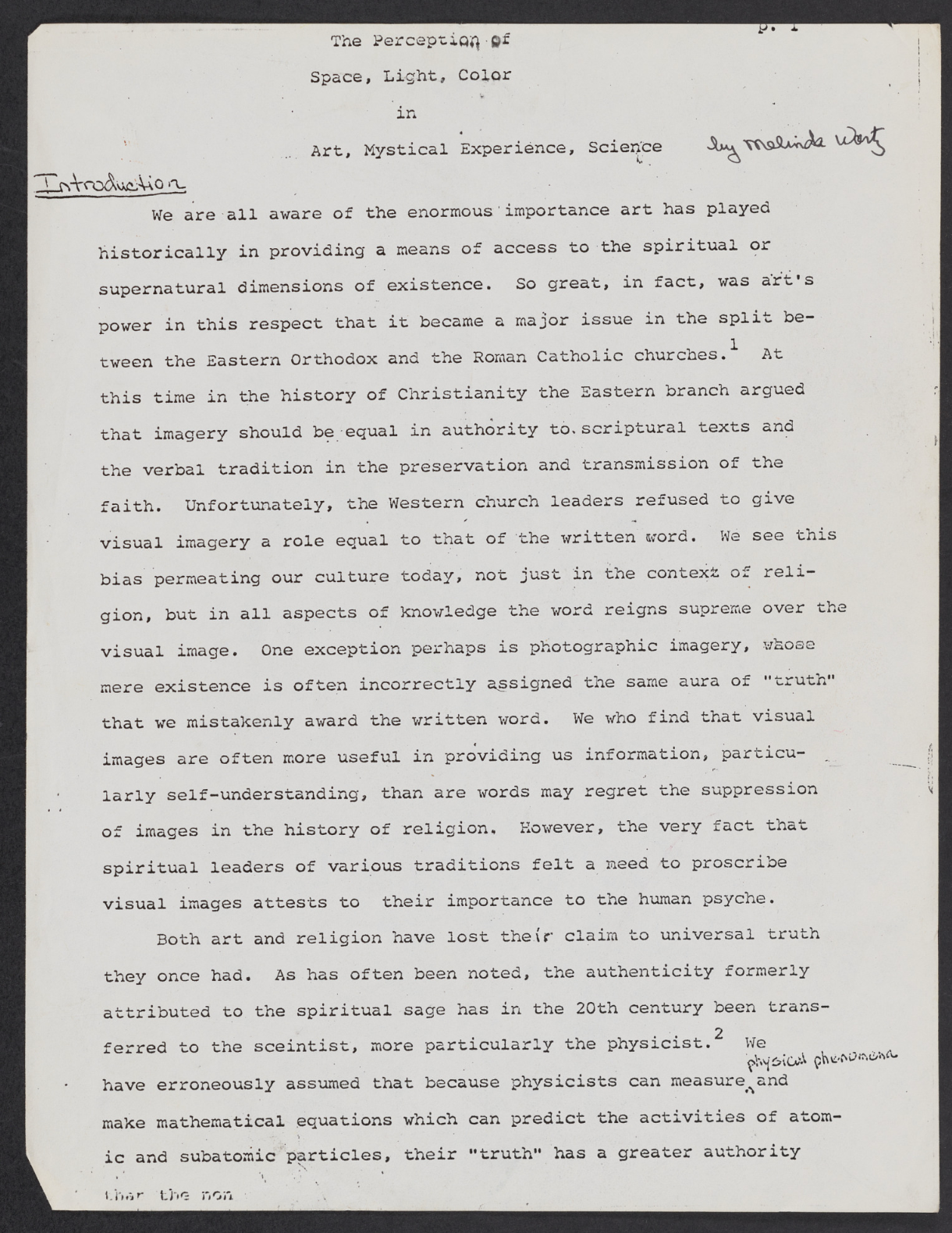 Book Introduction and Chapter 1, "The Perception of Space, Light, Color in Art, Mystical Experience, Science"
-
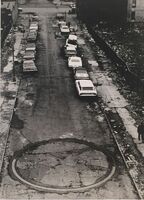 To Encircle Base Plate Hexagram, Right Angles Inverted
-
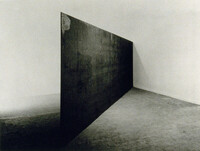 Strike: To Roberta and Rudy, 1969-1971
 While experimenting with how to stand thin plates of hot-rolled steel in a room, Serra discovered that once a plate was wedged into the corner, the plate remained standing in perfect balance and stability without any other external element.
Strike is essentially one tall, thin steel slice that, wedged into a corner, bisects the room and demands viewing from both sides. As one walks around the front of the piece, perception continually shifts: plane gives way to edge to plane again.
-
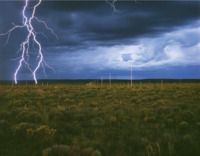 The Lightning Field
-
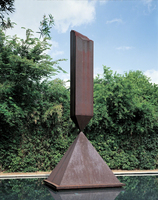 Broken Obelisk, 1963–1967
 An originator of Abstract Expressionism, Barnett Newman changed the course of 20th-century American painting. Newman’s monumental color field paintings consist of rectangles of rich, often mono- or bi-chromatic color that, when viewed from close proximity, are meant to confer a powerful spiritual experience, an encounter with the sublime.
Barnett Newman’s Broken Obelisk, made of Cor-Ten steel, stands more than 25 feet tall and weighs 6,000 pounds. An inverted obelisk—a four-sided tapering monument from Ancient Egypt—balances precariously atop a pyramid, another Egyptian form. The sculpture was not designed for a specific site but the severed, upended form suggests a reflection on political unrest occurring in the United States in the 1960s.
-
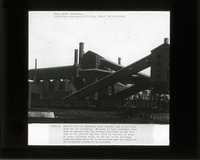 U.S. Steel Corporation. A lantern slide depicting Flue dust recovery at Carnegie Illinois Steel Corporation
 This image depicts at Gary Works, Carnegie-Illinois Steel Corp. One of the American manufacturers of COR-TEN® Steel.
Carnegie-Illinois Steel Corp. was a major subsidiary of U.S. Steel Corporation. It was created in 1936 by merging two older subsidiaries—Carnegie Steel Company and Illinois Steel Company—to consolidate US Steel operations
-
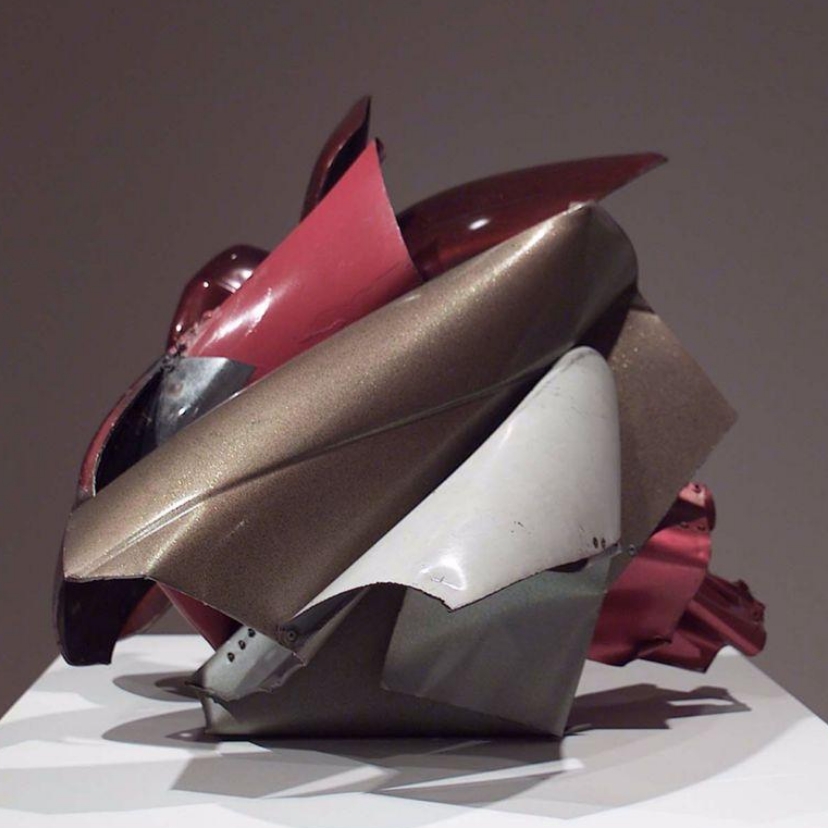 Red Ryder
 Sculpture made from crushed, brightly colored automobile parts, representing a fusion of Abstract Expressionism and Pop Art. The artwork is about transforming industrial wreckage into dynamic, three-dimensional forms, often viewed as a "collision" or gesture frozen in metal
-
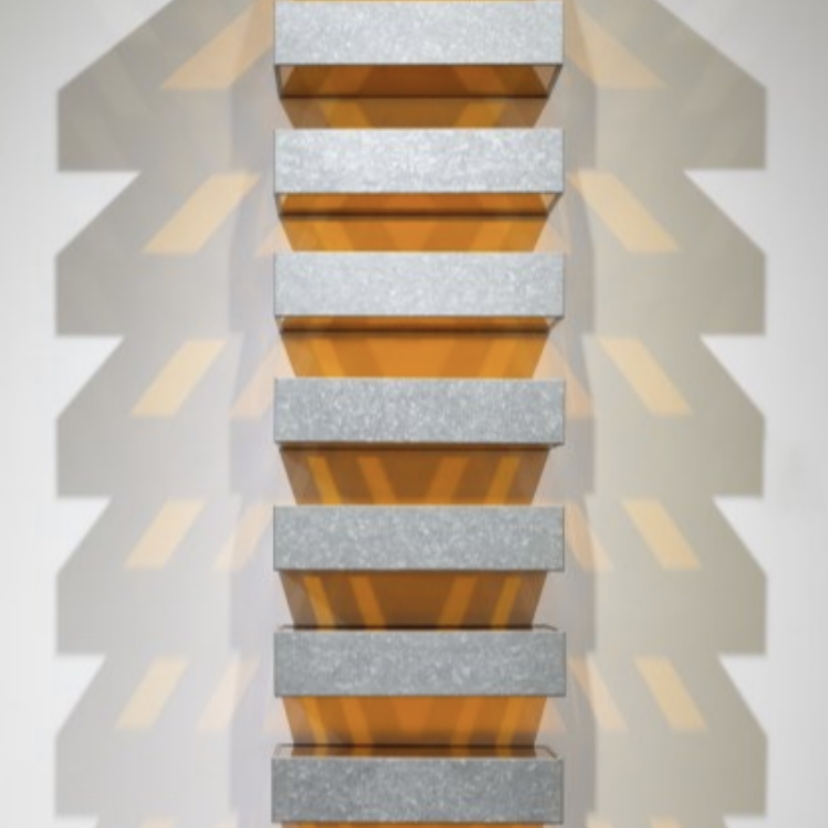 Untitled (Stacks) 1968
 Stainless steel and amber Plexiglas, 10 units
-
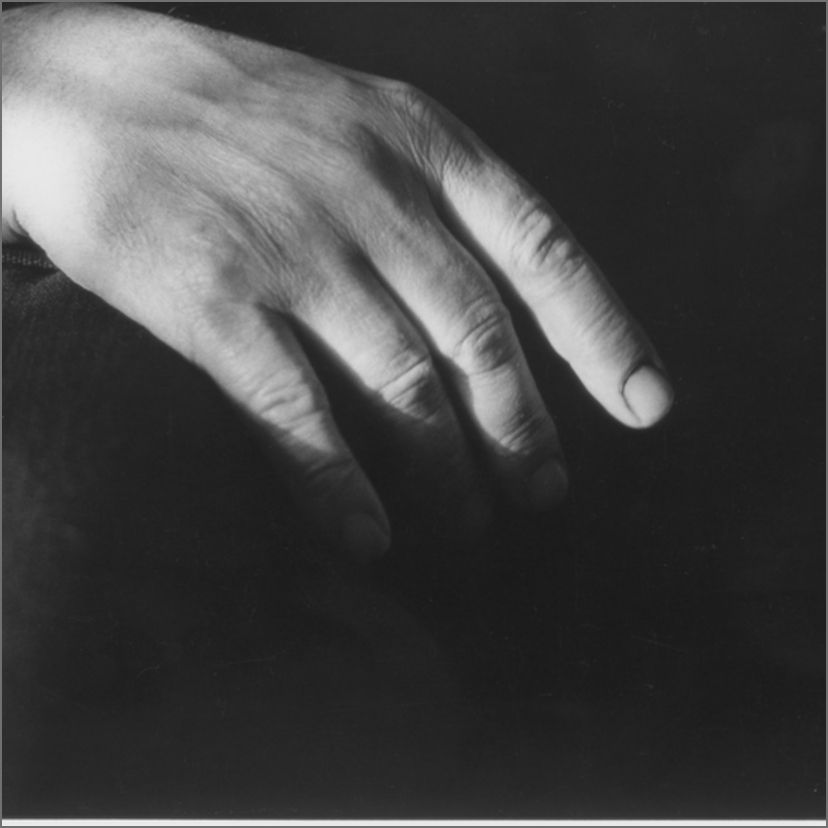 Rothko, Mark, 1964-1968
 Biographical or Historical Note: Russian-born artist Alexander Liberman was the influential art director of Vogue magazine from 1943 to 1962, then editorial director of Condé Nast publications until 1994. As an artist, Liberman worked in paint, large-scale sculpture, and photography. He photographed contemporary artists and other cultural figures, friends, family, and historical sites from about 1925 until 1998. He published several books of his photographs, including The Artist in His Studio (1960, 1988)
-
 Throne for the The Throne of the Third Heaven of the Nations’ Millennium General Assembly
 James Hampton's entire artistic output is this single work, which he constructed for more than fourteen years in a rented garage, transforming its drab interior into a heavenly vision. The Throne and its associated components are made from discarded materials and found objects such as old furniture, cardboard cutouts, and light bulbs. All were scavenged from secondhand shops, the streets, or the federal office buildings in which Hampton worked as a janitor. To complete each element, Hampton used shimmering metallic foils and brilliant purple paper (now faded to tan) to evoke spiritual awe and splendor.
-
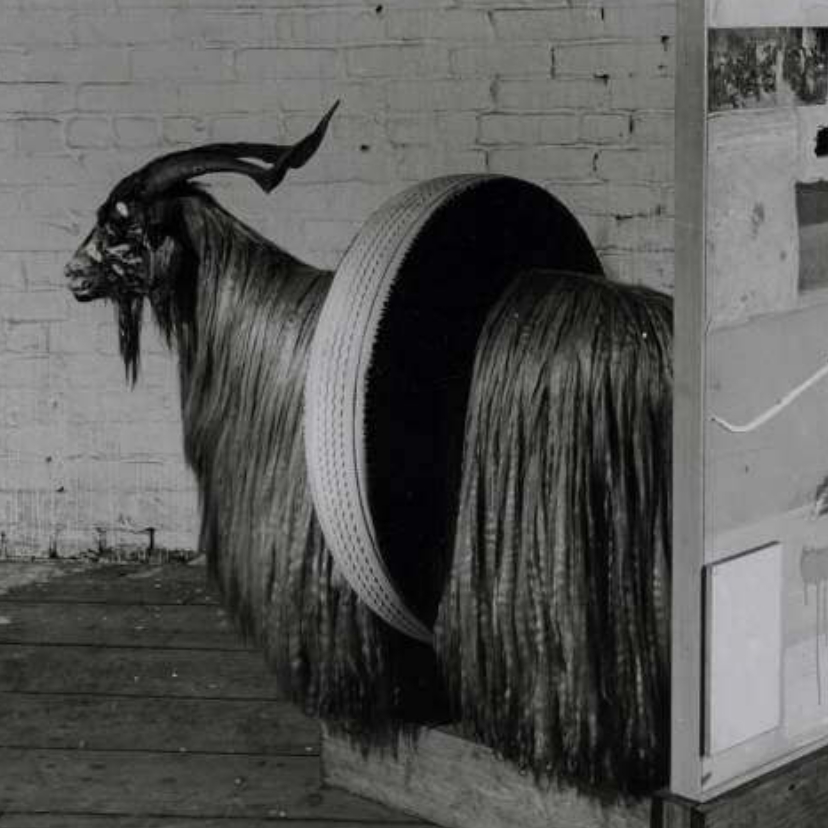 Monogram, second state
 Second state of Robert Rauschenberg’s “Monogram” (1955–59; second state 1956–58) in his Pearl Street studio , New York, NY, United States, circa 1958. Photo: Rudy Burckhardt
-
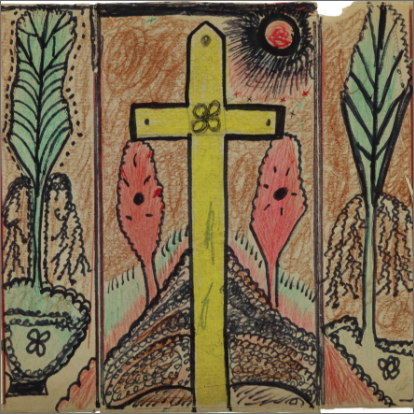 Untitled (Cross and Trees)
 Crayon, pencil, and marker drawing of a cross and trees on a flattened shoebox.
-
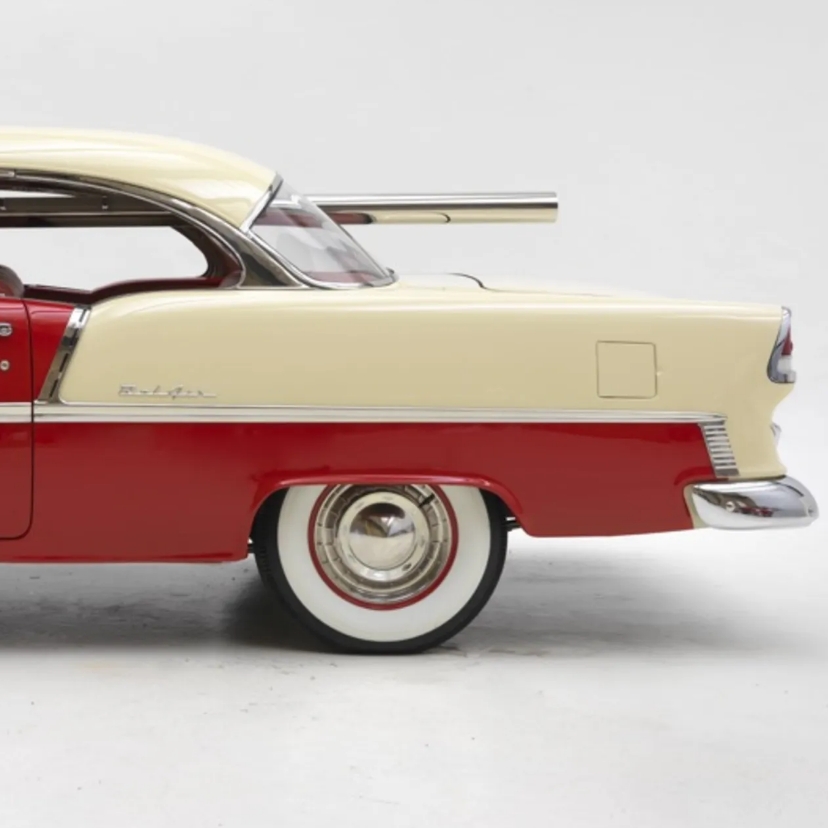 Bel Air Trilogy: Circle Rod, 2000–2011
 One of three minimal stainless steel rod sculptures within a set of three meticulously restored 1955 Chevrolet Bel Air automobiles. The three Bel Airs in the sculpture group are a matched set, each painted in the signature two-tone color scheme of "Gypsy Red" and "Shoreline Beige".
-
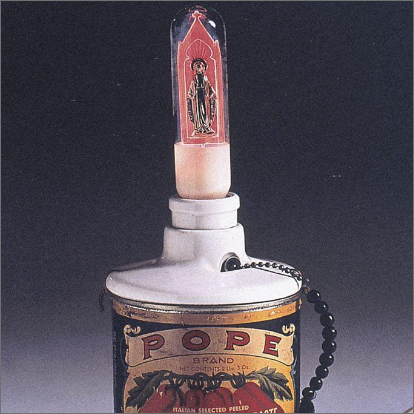 East New York Shrine
 signed, inscribed and dated 'HOLY MOTHER LOADED WITH GRACE PLEASE HELP JEANIE SONJA AND DAN FLAVIN 1962-1966' (upper edge)
-
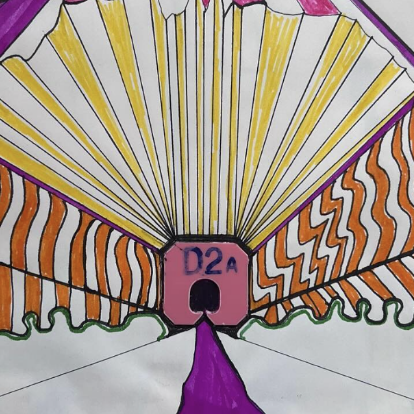 Untitled Collage (with bread lock)
 For almost 40 years, beginning in the early 1960s, New York artist John Evans (b. 1932) produced a collage each day, cutting and pasting the fragments of the day onto the painted pages of his diary. Evans used stamps, labels, photographs, fabric and found objects, creating a visual and material record of the last four decades of the 20th century.
-
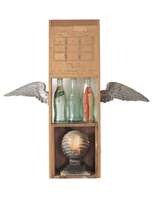 Coca-Cola Plan
 Combine: graphite on paper, oil on three Coca-Cola bottles, wood newel cap, and cast metal wings on wood structure
-
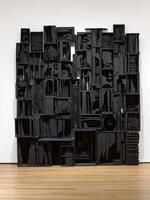 Sky Cathedral
 Sky Cathedral consists of boxes stacked against a wall, each compartment filled with wooden scraps including moldings, dowels, spindles, and furniture parts.
-
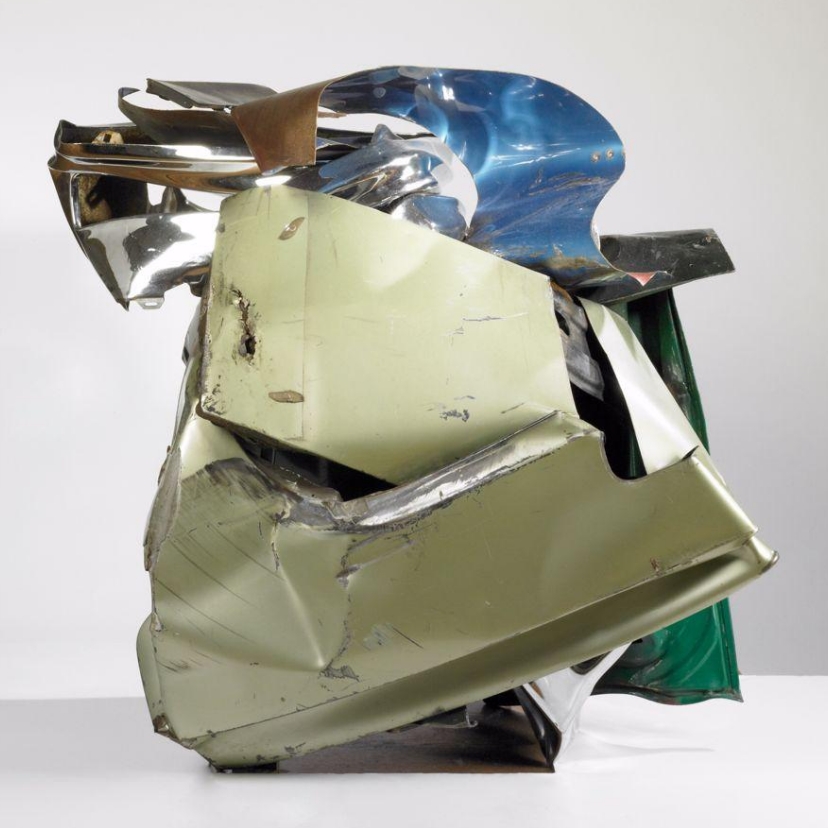 Box Candy
 This sculpture is created from salvaged, crushed, and welded steel parts of American automobiles, primarily from the 1950s and 60s, such as Fords, Chevrolets, and Cadillacs. He utilized fenders, bumpers, and chassis for their pre-painted, industrial colors. Compressed pieces of automobile sheet metal used here are painted by the original manufacturer in shades of green, off-white, brown, and sky blue.
-
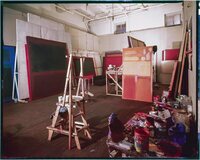 Seagram Murals (1958–1959)
 In 1958, Mark Rothko was commissioned to produce a series of works for the exclusive dining room of the opulent Four Seasons restaurant in the newly-built Seagram Building at 375 Park Avenue designed by architects Mies van der Rohe and Philip Johnson. He constructed a scaffold in his studio to match the site’s dimensions, allowing him to paint at scale.
Rothko spent two years working on the project, producing a total of 30 panels, seven of which were to fit together in the restaurant. Almost two years after receiving the commission for $35,000 (roughly $395,000 today), he abruptly returned the money, and withdrew the works. The nine works included in this set are the most significant grouping. The arrangement, lighting and exhibition were agreed upon by Rothko in detailed negotiations with the director of the Tate Gallery. The paintings arrived at the Tate on February 25, 1970, the day of Rothko’s suicide in New York.
-
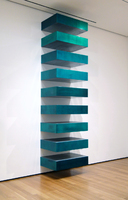 Untitled (Stack)
 Although it is hung on a wall like a painting, Untitled (Stack) projects nearly three feet from the wall and climbs like rungs on a ladder from floor to ceiling. It is made of galvanized iron boxes, all identical and of equal importance. The sides are covered with commercially available green lacquer paint typically used to customize Harley-Davidson motorcycles. Pieces from this era often featured stampings reading "JO JUDD BERNSTEIN BROS. INC