-
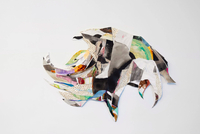 Storm "(how to imagine the tropicalia as monumental as in to move like a scraping sea)"
 U.S. Virgin Islander La Vaughn Belle, is a multidisciplinary artist who's work often focuses on the material traces of the colonial past to create new stories for the present. This work is characterized by its dynamic, jagged silhouette that suggests movement and organic growth, reminiscent of both a storm and a blossoming form. Belle often works with themes of 'fragments and silences,' using the physical act history and identity in the Caribbean and beyond.
-
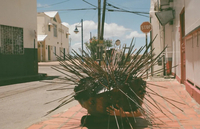 Echidna
 The work often explores themes of identity, protection and visibility within Caribbean spaces. By transforming into a "spiny" creature, the artist creates a literal and metaphorical barrier, demanding space while simultaneously appearing vulnerable or monstrous in a public setting. The artist is captured wearing a large, spherical structure made of long, radiating stalks, resembling the spines of an echidna or sea urchin. Adams work often involves performance, that he uses to address queer identity and historical narratives. The use of "masquerade" and hybrid forms, is to challenge conventional perceptions of the body and its relationship to the environment.
-
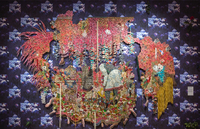 They Stood in a Time of Unknowing for Those Who Bear/Bare Witness
 A Contemporary Artwork by Jamaican Artist Ebony G Patterson that explores visibility and invisibility, a recurring theme in Pattersons practice, this work investigates who is seen and who remains hidden within society, particularly within the context of black youth and culture.
She is known to use traditionally "feminine" or decorative materials like beads and lace, she challenges perceptions of value and examines the performative nature of identity. The artwork uses the concept of the garden as both a space of lush beauty and a site of "burial", acting as a memorial for those whose lives and deaths often go unrecognized.
-
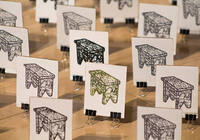 Little Gestures
 Little Gestures is a work on paper that reflects Christopher Cozier’s sustained engagement with
Caribbean identity, postcolonial discourse, and the political resonance of everyday acts. The
composition employs restrained ink line and watercolor washes, emphasizing fragmentation,
gesture, and spatial tension. The scale and materiality of the work support an intimate viewing
experience, reinforcing the conceptual focus on small, embodied actions as sites of social
meaning.
-
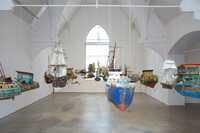 Here’s the Thing
 Involving a wide range of media – painting, drawing, photography, sculpture and installation, Locke explores the languages of colonial and post-colonial power, and the symbols through which different cultures assume and assert identity. Fusing historical source material with a keen interest in current affairs, often through the juxtaposition or modification of existing artefacts, Locke focuses attention especially on the UK, the monarchy and his childhood home of the then newly independent Guyana.