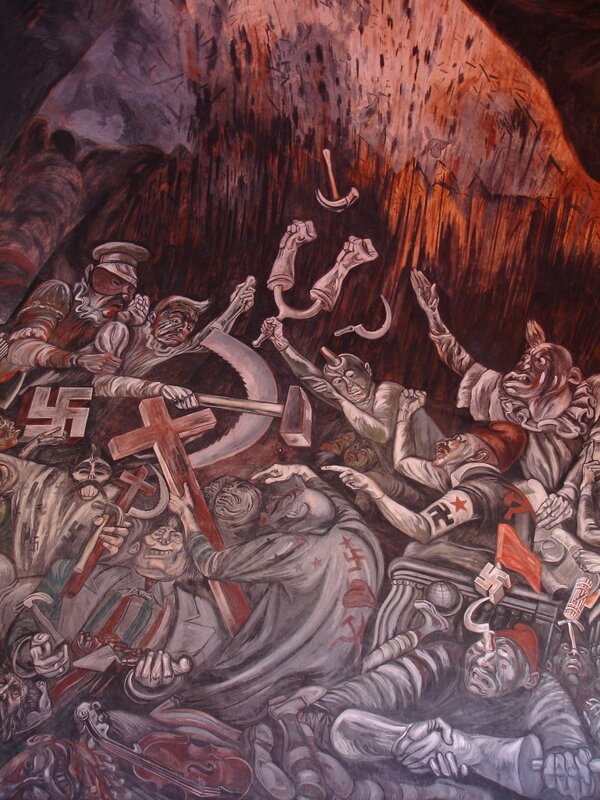
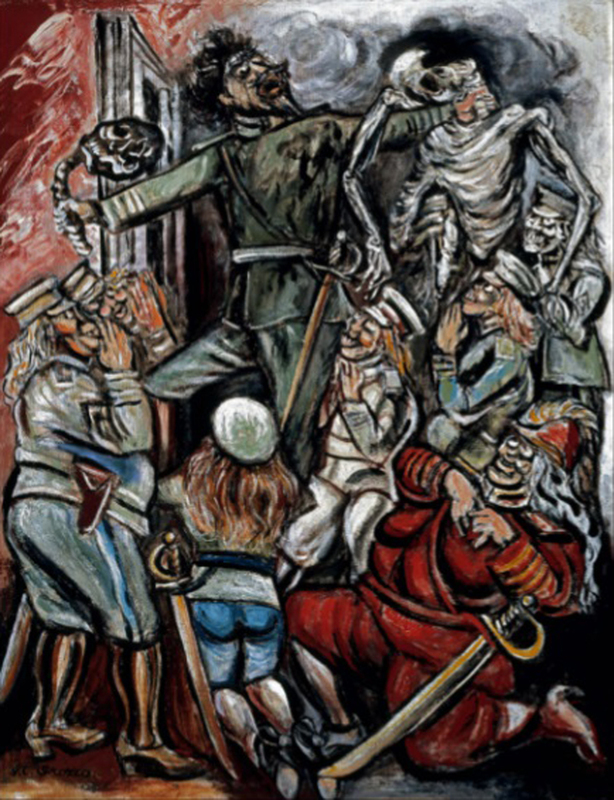
This mural protrays the chaos of WWII, depicting the leaders of war and facism trapped in their own hell. This piece serves as a critique of facism and ideological conflict.
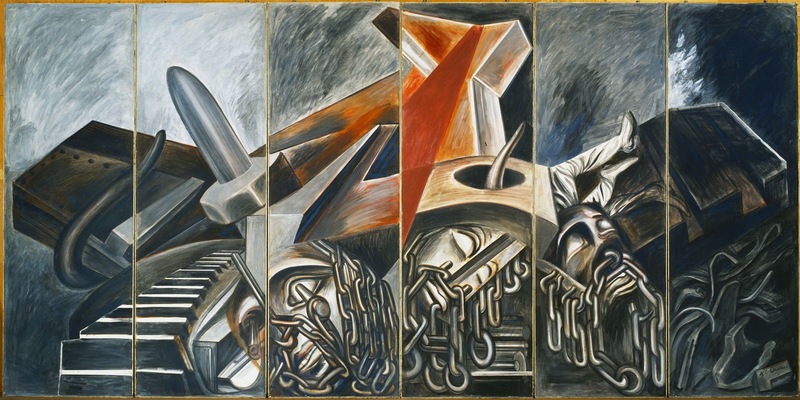
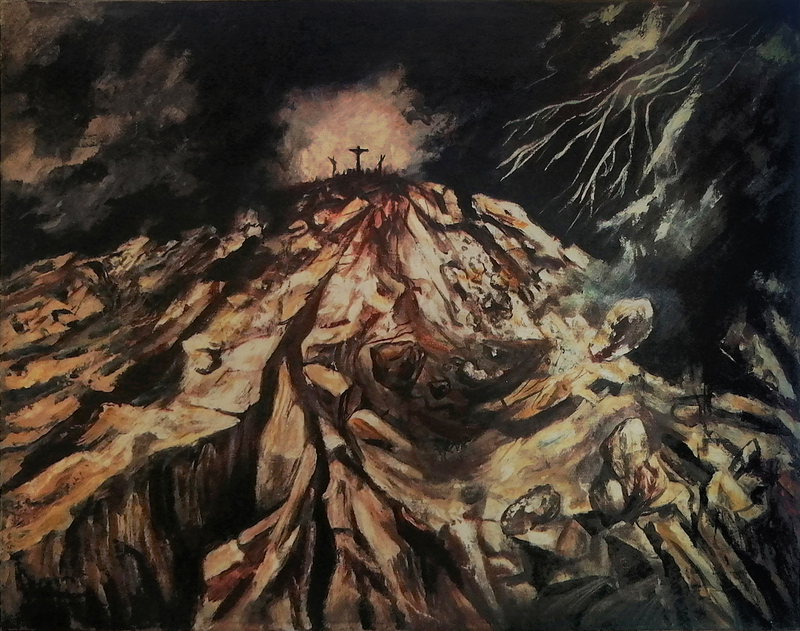
This painting represents the destruction of modern warefare. A mixture of human remains, tanks, and large piles of machinery appear, serving as a universal message against violence.
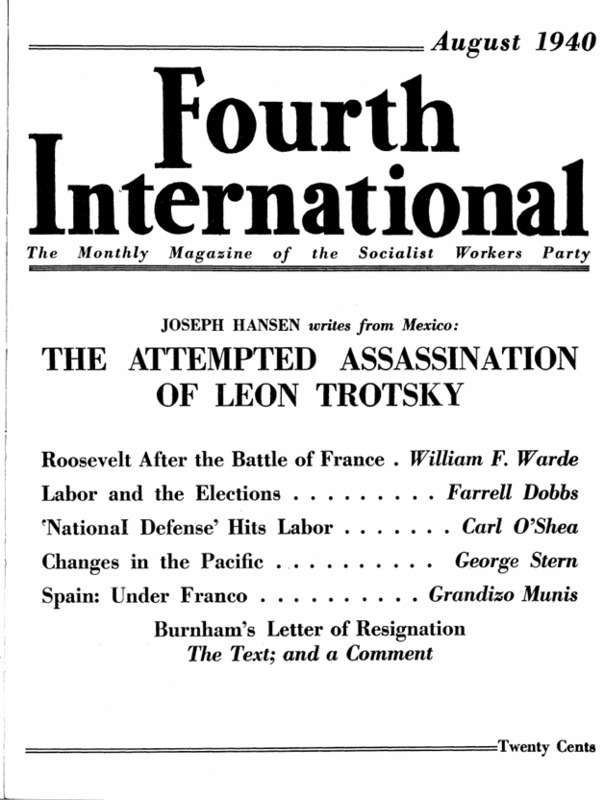
Socialist Magazine, Fourth International, published by the National Committee of the Socialist Workers Party, writes about the attempted assasination by David Alfaro Siqueiros and others of Socialist politician Leon Trotsky.
A politically charged painting depicting a demagogue addressing a faceless crowd. This painting is part of his larger efforts to depict harsh realities, power dynamics, and showing leaders as manipulators.
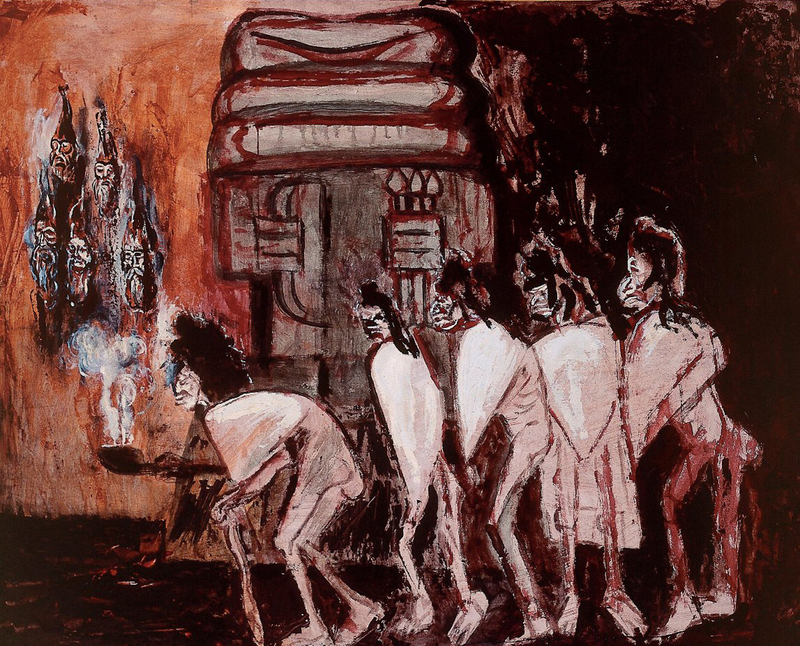
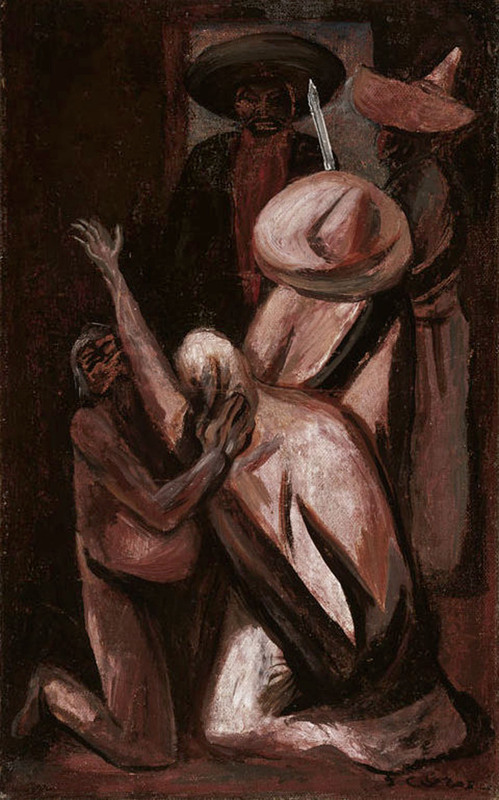
A mural panel from Orozco’s San Ildefonso cycle depicting a ritual scene centered on the Aztec deity Huitzilopochtli. Orozco shifts from using historical realism to use mythology as metaphors for human cruelty he witnessed during World Wars.
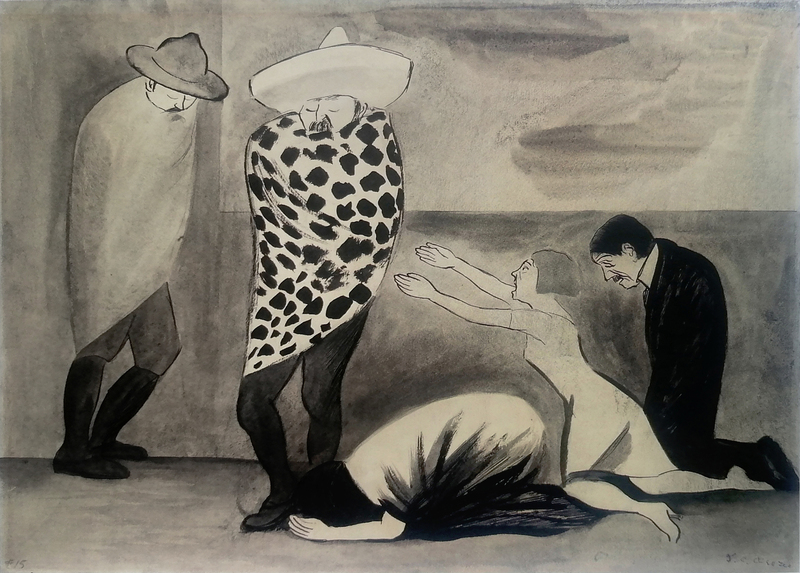
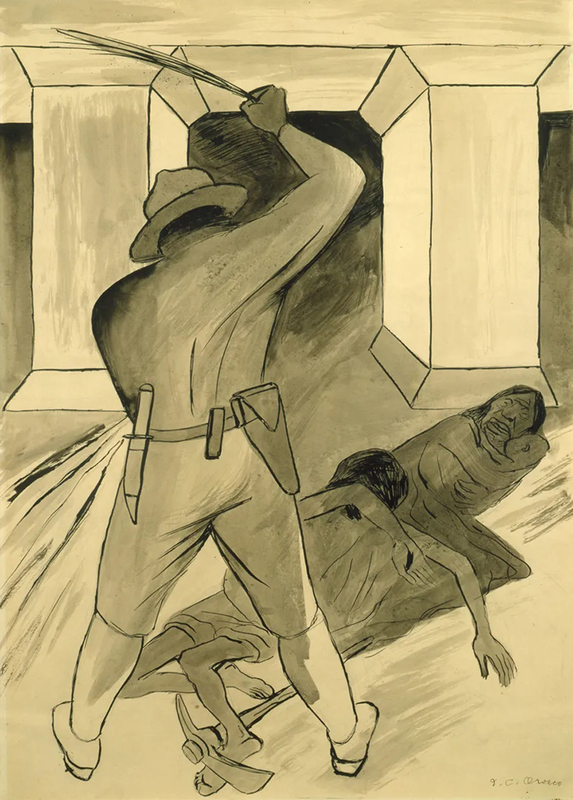
A stark depiction of torture and human suffering from Orozco's early mural cycle . The work exposes brutality embedded in political and social structures.
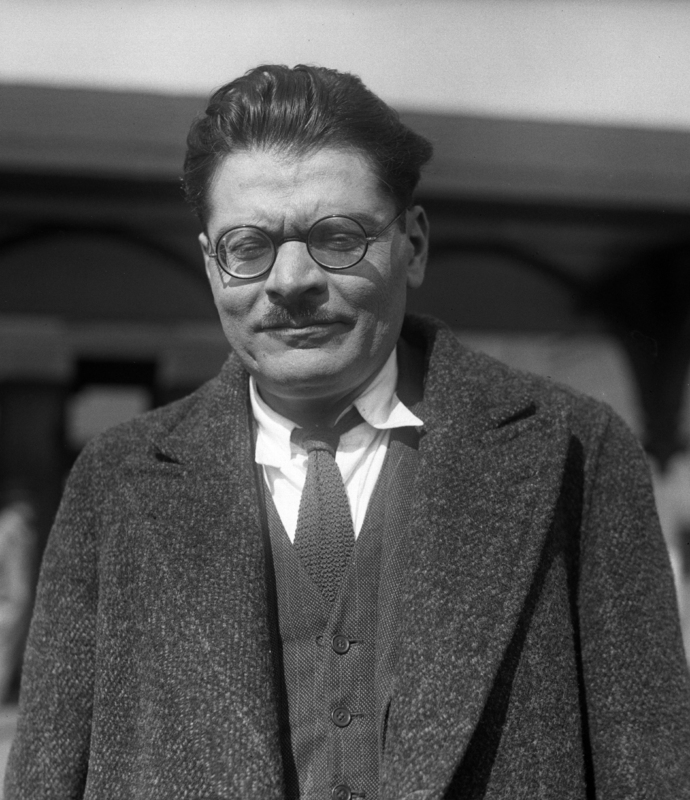
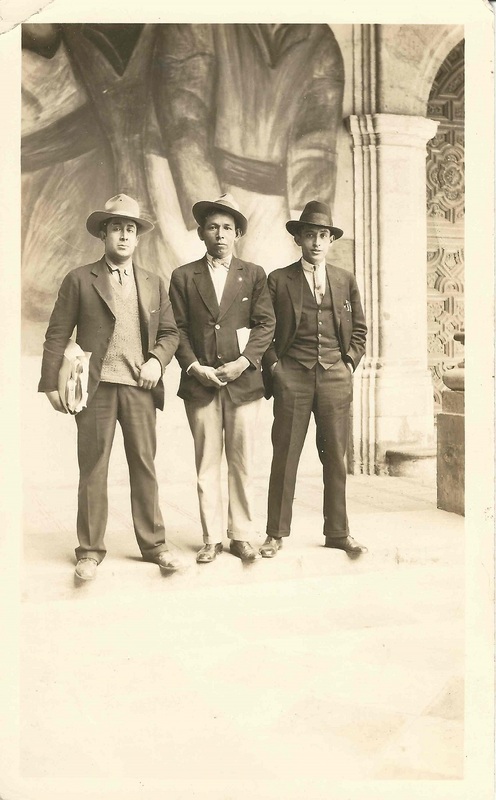
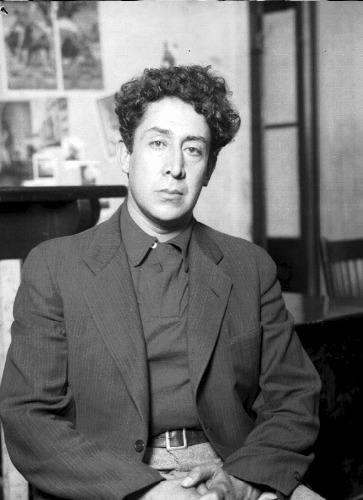
Photo of David Alfaro Siqueiros, Amado de la Cueva, and Ixca Farías all whom were pivotal in the Mexican Muralist movement. For all three painters, art was a revolutionary tool to educate and advocate on workers rights.
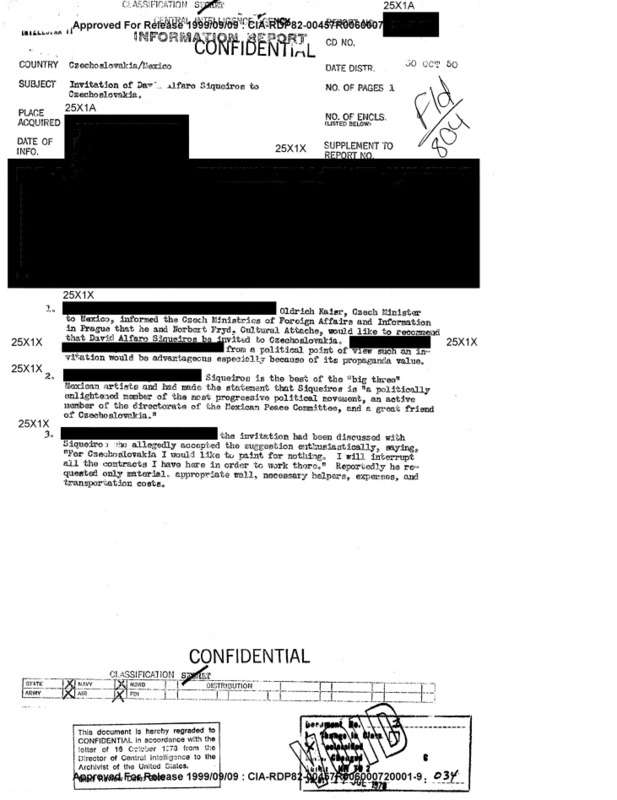
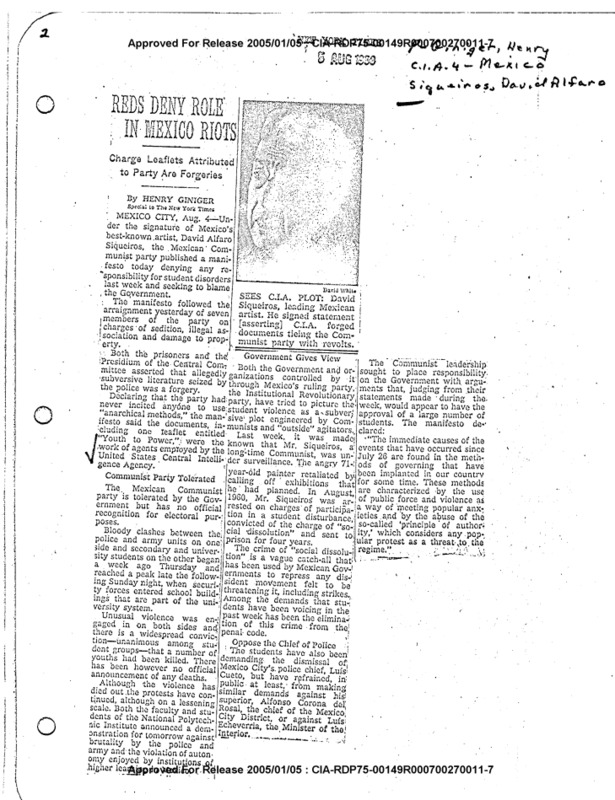
Declassified CIA document, "David Siqueiros, leaading Mexian artist, he signed statement [ asserting] C.I.A. forged documents tieing the Communist party with revolts".
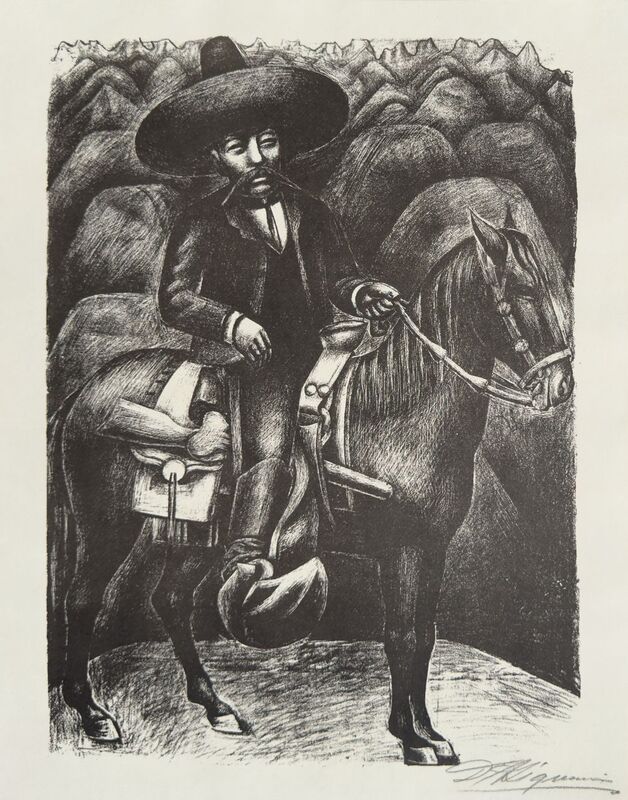
A lithographic print depicting Emiliano Zapata Salazar. Zapata was a Mexican revolutionary and guerrilla leader who led the Mexican Revolution in the 1910s-1920s in the state of Morelos. This image of Zapata on horseback emphasizes his role as a leader of reform and resistance.
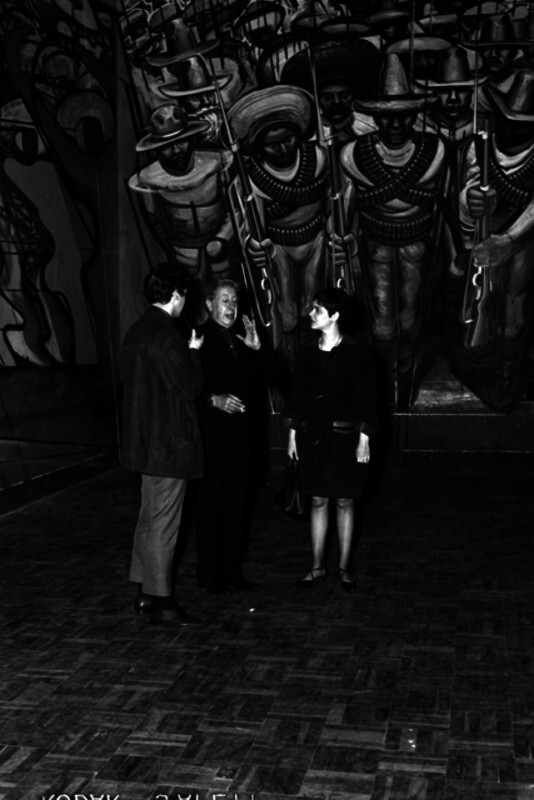
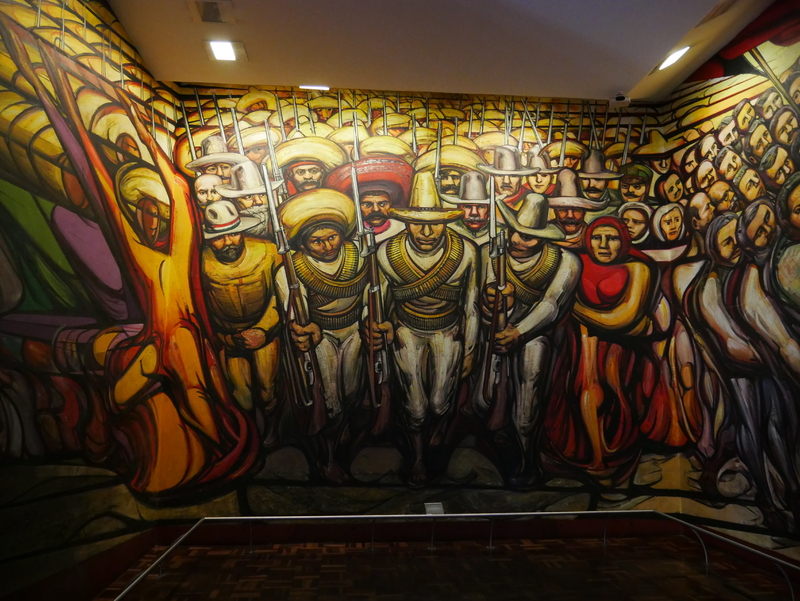
David Alfaro Siqueiros accompanied by others at the Castillo de Chapultepec in Mexico City. The image captures Siqueiros in front of one of the major sections of his mural cycle, Del Porfirismo a la Revolución.
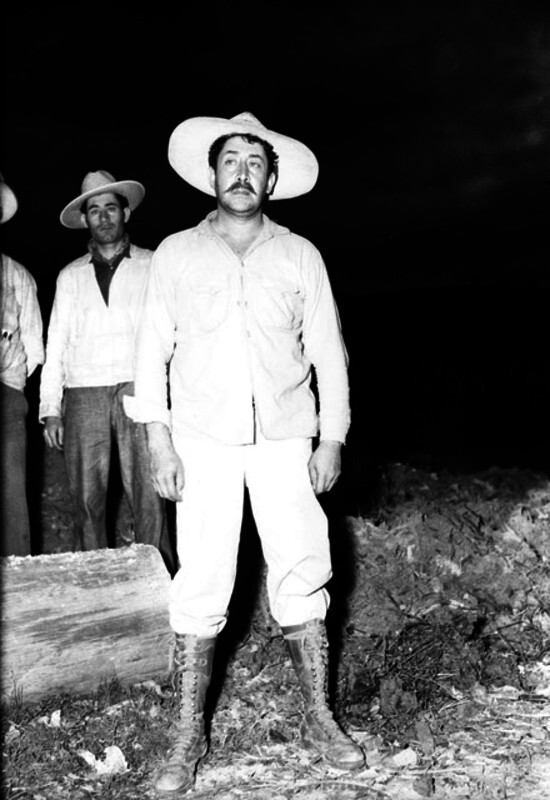
David Alfaro Siqueiros dressed as a peasant under the name of Macario Huízar in the mountains of Hostotipaquillo, an alias he used while evading authorities following his involvement in the 1940 armed attack on Leon Trotsky’s home in Mexico City.
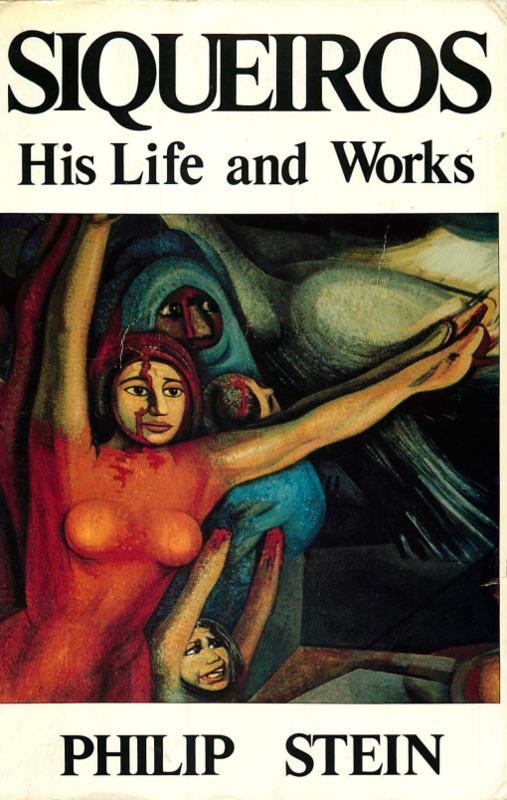
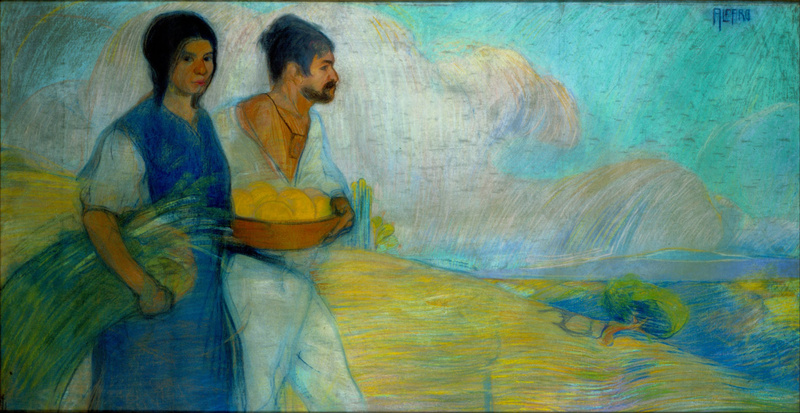
Early Siqueiros painting depicting rural Mexican laborers. Reflects his emerging commitment to the working class and social inequalities. A foreshadow to his involvement in anti-fascist movements.
Large-scale political mural depicting the transition from the Porfirian dictatorship to the Mexican Revolution. This digital image presents a photograph of the mural taken by a Wikimedia Commons contributor.