
My Topic
This project started with my curiosity about who has set the beauty standards that still affect women’s insecurities today. From a young age, women learn to hide parts of their bodies, like body hair or menstruation, and are pushed to fit ideals of thinness, beauty, and desirability. These expectations are not neutral. They come from Western European art traditions that have shaped how femininity is seen and valued. Because of this, women are often judged by narrow standards and criticized if they do not fit them. While studying art history, I became interested in how these ideas have changed—from beauty defined mostly by men to recent efforts by women to reshape these standards. This project takes that question into the digital world, looking at how these old ideas still show up and how people are now challenging them.
“The Male Gaze and the Critique of Beauty” shares a woman’s view on how society creates, questions, and changes ideas about beauty. It shows that these standards are not set in stone, but are shaped by culture and can change over time. By doing this, it questions the idea that there is only one way to see beauty and makes room for many different, personal ways of seeing and being seen.
The Gaze Through Time
How it Began (19th Century): Academic Panintings
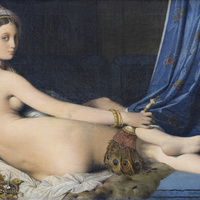
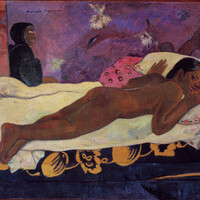
The first five artworks focus on the 19th century, a time when academic painting promoted ideals like femininity, youth, and passivity. These pieces show how artists shaped the female body to fit patriarchal standards, presenting beauty as something controlled and meant to attract men. By repeating these themes, artists did more than mirror social norms—they helped create and spread the idea that women should be passive and decorative. This trend in art supported the wider belief that women were meant to be looked at, not to take an active role.
“Academic Art.” Wikipedia. Accessed May 5, 2026. https://en.wikipedia.org/wiki/Academic_art.


Where it Went (20th Century): Commercialization of Sexuality
The next five artworks come from the 20th century, a time when the objectification of women became more noticeable, especially in modernism and pop art. Each style depicts women differently, but they are still mainly shown as visual objects. Many artists use fragmentation, abstraction, and commercialization to break the female body into separate parts to please, sell sex, or reiterate gender stereotypes to an audience. These methods can sometimes make objectification less obvious, but it is still present. This change in artistic approach mirrors larger cultural shifts, as media and advertising began sharing these images with a much bigger audience. The male gaze does not just go away over time; it simply adapts to new artistic styles and continues shaping how women are depicted.
“Sex in Advertising.” Wikipedia. Accessed May 5, 2026. https://en.wikipedia.org/wiki/Sex_in_advertising.




When it Changed (21st Century): Women Reclaiming Agency
The next five works move into the 21st century and offer a critique of the male gaze by introducing what can be called the female gaze. Here, women paint women, reclaim their agency, and redefine beauty on their own terms. Instead of showing passive representations, these works focus on lived experience, embodiment, and self-definition rather than outside ideals. The female body is no longer just for visual consumption; it becomes a symbol of autonomy, resistance, and complexity. With this change, artists break away from old standards of beauty and question the authority of traditional art history. This shift also changes the act of looking, putting the focus on subjectivity and control instead of objectification.
“Feminist Art Movement.” Wikipedia. Accessed May 5, 2026. https://en.wikipedia.org/wiki/Feminist_art_movement.




What we see Now (The Present): Beauty Redefined
The last five works are dedicated to Tirtzah Bassel, whose practice directly challenges Western beauty standards and entrenched gender expectations. Through her reworkings of canonical artworks, she exposes how historical representations have constructed and limited the female body within patriarchal frameworks. In many ways, the male gaze inspired the emergence of the female gaze—not as a continuation, but as a direct critique of what Western culture has historically deemed acceptable, desirable, or even taboo. Bassel’s interventions actively confront these inherited norms, reclaiming the body as a site of agency rather than objectification. As a result, her work not only critiques the past but also redefines how women can be seen and represented in the present.
Bassel, Tirtzah. “About.” Tirtzah Bassel. Accessed May 5, 2026. https://www.tirtzahbassel.com/about.
Bassel, Tirtzah. “Canon in Drag.” Tirtzah Bassel. Accessed May 5, 2026. https://www.tirtzahbassel.com/canon-in-drag.
Richards, Christopher T. “Tirtzah Bassel: Canon in Drag.” The Brooklyn Rail. November 2022. https://brooklynrail.org/2022/11/artseen/Tirtzah-Bassel-Canon-in-Drag/.